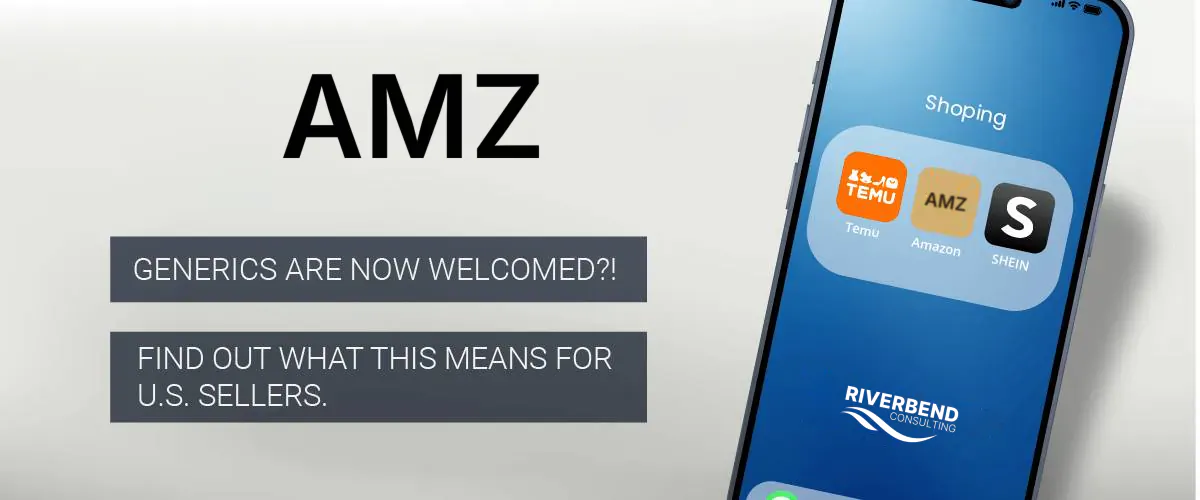
After years of telling sellers in the United States they cannot list generic products, Amazon has launched Haul, a marketplace of nothing but generic items from Chinese sellers, all to compete with Shein and Temu.
What gives, Amazon? Don’t U.S.-based sellers already struggle enough to compete? And what’s a seller to do?
Generics are suddenly ok?
Perhaps the most baffling part of the Haul marketplace is that it purportedly will focus on generic products.
This is after Amazon has spent a decade battling generic products on its platform. And generic products are no longer welcome – at all. A product must have a brand name to be listed. And sellers have even been suspended for listing generic products.
Amazon takes this a step further. It knows the “white label” trick in which sellers purchase generics from platforms like Alibaba, and then slap a sticker on them. Voila, a non-generic product with “a brand.” That is not allowed. Amazon wants a brand name – preferably one that is in Brand Registry – that appears on the product, packaging and listing detail page. Stickers don’t count.
So, Amazon sellers, it’s baffling to consider. Haul will welcome generic products in all their no-name glory. These products will be supplied by Chinese manufacturers with no Brand Registry, no branding requirements–and likely no accountability.
We’ve got questions
Amazon has outlawed generics on the platform because generics don’t comport with Amazon’s obsessions: buyer experience and product quality. But if items on Amazon’s new Haul marketplace are generic:
- Will Amazon enforce against Haul sellers with products that have lead, cadmium and other poisons? What happened to safety and Amazon product compliance?
- How about products that violate EPA and state environmental regulations?
- Will Amazon require product testing be produced by Haul sellers on the regular?
- Will Amazon suspend Haul ASINs aggressively for bait-and-switch?
The struggles of competing with Chinese sellers on Amazon
It’s already difficult for U.S. sellers to win on Amazon.com. Too often, Chinese sellers show up on listings, yet their products don’t match. They are generic substitutions for a branded ASIN. Then, if they get suspended, the Chinese sellers simply fire up another one of their thousands of accounts and do it all over again.
It gets worse:
- Chinese manufacturers don’t always follow U.S. regulations for testing and product specifications. This makes their products cheaper – and potentially dangerous to buyers, the environment and the marketplace.
- Chinese manufacturers are subsidized by the Chinese Communist Party. The government owns a piece of manufacturing companies, and money flows freely to help them compete – or dominate – overseas. This is unfair competition, since U.S. sellers and brands do not enjoy the same kinds of subsidies.
- Chinese sellers get shipping rates subsidized by U.S. taxpayers, thanks to the ridiculous ePacket agreement. It can be cheaper for a Chinese seller to merchant fulfill an item from Shenzhen than it is for a U.S. seller to ship the same item over the Rocky Mountains.
- Chinese manufacturers sometimes use enslaved, imprisoned and abused labor, while U.S. sellers must prove their entire supply chain is ethical. Look no further than the case of Milwaukee Tool, which was sued by a Chinese National whose case was then picked up by the U.S. government. Would a Chinese citizen even be able to sue China and one of its partially owned businesses for abusing them as slave labor? You can bet not.
How can U.S. sellers compete?
Where does this leave U.S. sellers? They must pivot quickly to create products and brands that make sense in a changing marketplace.
First, let’s start by addressing a tempting offer by Temu, which is telling U.S. sellers they can enjoy low or no selling and fulfillment fees. Could this be the answer? Before jumping into Temu, be sure to consider:
- Can you compete on price there, even with low or no fees?
- If you have to invest to build infrastructure, will Temu still make sense once they raise fees after the promotional period ends?
Meanwhile, in Amazon world, there are several strategies U.S. sellers can undertake to compete:
- Choose products and categories where quality and safety inherently matter to buyers. Think health and beauty, consumables and baby items. It’s easier to earn and hold buyer trust when they believe their safety is at stake.
- Focus on brand building to overcome generic knockoffs. Yes, the new Haul marketplace will hurt U.S. sellers simply by the inherent cheapness of generics. The only good response? Double down on brand-building to make your products more attractive to buyers. Create a compelling brand story that resonates with consumers. This can differentiate your products from generic alternatives and build a loyal following.
- Consider niche markets. Identify and target niche markets that may be underserved. Specializing in a particular segment can help you avoid direct competition with larger players.
- Protect your intellectual property and brand as much as possible. Generics mean knock-offs. And inviting more Chinese generics to Amazon will hurt brands that don’t fight for their intellectual property. Be sure your ASINs are protected in Brand Registry and be ready to file complaints as appropriate. Brand protection is critical.
- Rethink where you manufacture, how you manufacture, and what inputs you use. For some categories and products, getting that “Made in the USA” label can create competitive advantage. Using high-quality ingredients can create an advantage as well, with the right messaging. It’s always good to re-visit Amazon’s supply chain standards.
- Benefit from Subscribe & Save. A generic product is not an always-available product. If your product can become Subscribe & Save, invest in earning S&S buyers. Give big discounts. Make sure you’re always in stock. Nobody can compete with you once these buyers are earned.
- Highlight sustainability and ethical production: Sellers can emphasize that they offer eco-friendly, ethically sourced and sustainable products. By highlighting manufacturing, supply chain and labor practices, the brand can appeal to a consumer public who is increasingly environmentally conscious and who wants to support and reward ethical practices. Offering proof of certifications, such as Fair Trade or USDA Organic, can further enhance this competitive edge.
- Offer awesome customer service to give a “local store” feel: Buyers love above-and-beyond customer service, faster shipping times and easy returns. The same goes for responsive customer support for problems, or making it easy to take advantage of warranties. Respond promptly to inquiries, resolve issues efficiently, and encourage reviews that can enhance your reputation. Provide the personal touch. Mirror that favorite locally owned and operated shop the buyer prefers. Sellers can attract people who value a more human shopping experience when compared to dealing with invisible, international sellers.
- Optimize listings and marketing. Invest in Search Engine Optimization (SEO) for product listings, and use high-quality images and detailed descriptions. Use targeted advertising to reach your audience effectively. Social media can also help build brand awareness and community engagement. These are especially important during the holiday season.
Our final suggestion? NEGU
Never, Ever Give Up. NEGU.
There are always ways to compete and win.
U.S. sellers on the Amazon marketplace have already proven their competence, creativity and resilience time and time again.
Now is not the time to throw in the towel. Double down on your best efforts. Find a way to win. For all its challenges, we are still believers in the Amazon Marketplace. Have you checked out The Amazon Incubator? It’s a good read (if I say so myself).
But more importantly, we are tremendous believers in U.S. brands and sellers.