
One of the most gut-wrenching emails you can receive as an Amazon seller is the dreaded “inauthentic” notification. You log into Seller Central, ready to manage your orders and instead, you’re met with a performance notification that knocks the wind out of you. Your listing, or worse, your entire account, has been deactivated because of “inauthentic item complaints.” Panic sets in. You know your products are real. You’ve sourced them properly, followed the rules and taken pride in every shipment. So, what went wrong?
The word “inauthentic” on Amazon doesn’t necessarily mean your product is fake or counterfeit. But that’s exactly how it feels when Amazon slaps that label on your listing. If you don’t handle it correctly, you risk long-term damage to your account.
If this is your first time navigating Amazon’s labyrinth of policies, don’t worry. You’re not alone. Many honest, hard-working sellers have faced this issue. With the right approach, you can win your Amazon appeal and return stronger.
What is an inauthentic claim and how do these claims affect your account?

At first glance, “inauthentic” suggests a product is fake. But that isn’t always the case on Amazon. “Inauthentic” is a broad, catch-all label that Amazon uses when it believes there’s a problem with your product’s origin, sourcing, or documentation. It’s their way of saying they can’t confirm where the item came from or whether it meets their standards.
Here’s where it gets tricky. Amazon doesn’t always tell you who complained or why. You might receive a vague note like “customer reported inauthentic item” or “product authenticity cannot be verified.” This ambiguity is frustrating, especially if you know your goods are legitimate.
Inauthentic claims can happen in a few different ways. A buyer might be suspicious of damaged packaging. An automated system might flag your listing after a pattern of returns. Or a competitor might submit a bad-faith complaint to push you off the listing. Amazon often acts quickly based on automated signals before requesting documentation from the seller.
When this happens, your account health score can drop. Your listings may be removed. And if the issue isn’t resolved, you could be suspended altogether. The consequences are real. That’s why it’s vital to treat inauthentic claims seriously and respond with a clear, confident and well-documented appeal.
Top reasons for inauthentic claims on Amazon
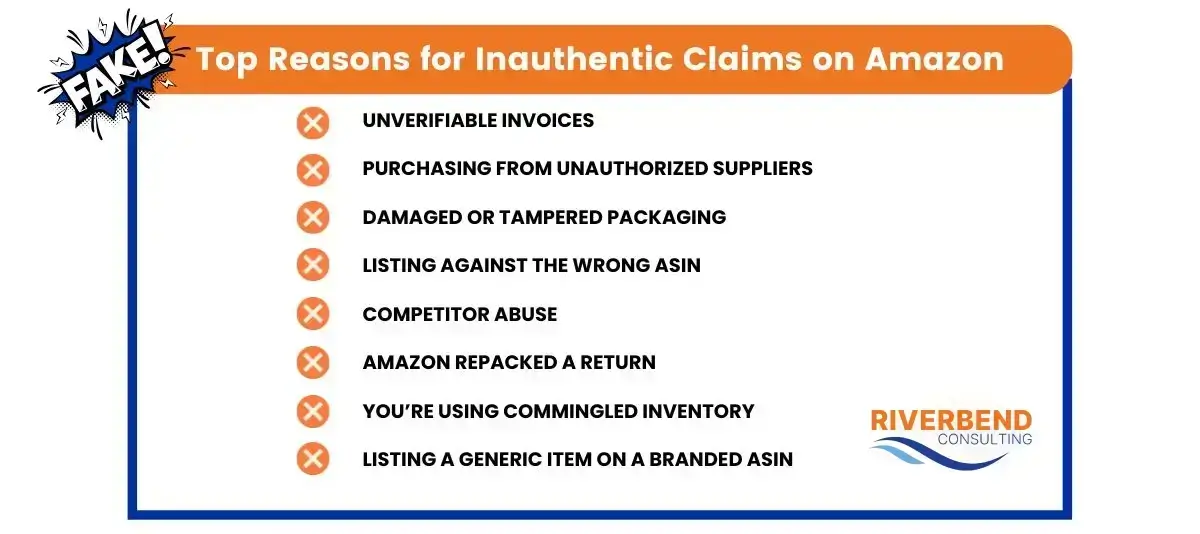
Before you can write a winning appeal, you need to understand why these claims happen in the first place. It’s not always about counterfeit products. Sellers often can be caught with inauthentic claims, yet carry authentic merchandise. In many cases, they haven’t met Amazon’s strict documentation or handling standards, which leads to the suspension.
Here are the most common causes:
1. Unverifiable invoices
This is the number one culprit. If Amazon asks for invoices and you submit something handwritten, blurry, missing contact info, or dated over 180 days ago, it can be rejected. Even if the product is legit, poor documentation raises red flags.
2. Purchasing from unauthorized suppliers
Buying from liquidation sites, eBay, AliExpress, or even grey-market wholesalers can trigger an inauthentic claim, especially if Amazon doesn’t recognize the supplier as an authorized distributor for the brand.
3. Damaged or tampered packaging
If your customer receives a product that looks used, open, or damaged, even slightly, they might think it’s fake. Complaints like “broken seal,” “missing instructions,” or “damaged box” can lead to an inauthentic flag.
4. Listing against the wrong ASIN
If you list your product on an ASIN that’s not an actual match (wrong variation, older version, or a different region’s packaging), you could receive a complaint, even if your product is authentic.
5. Competitor abuse
Unfortunately, black-hat sellers sometimes submit fake, inauthentic complaints just to knock you off the Buy Box or shut down your listing. Amazon doesn’t always investigate first—they suspend and then wait for your proof.
Understanding the root causes is the first step in crafting an appeal that addresses Amazon’s concerns head-on. The goal isn’t to argue that your product is real, it’s to show that your entire operation meets Amazon’s expectations of quality, traceability and professionalism.
6. Returned items incorrectly restocked as new
Yes, FBA can sometimes contribute to the issue. While Amazon has processes to inspect returns, items may occasionally be mistakenly restocked as new even if they were opened, used, or damaged. If that unit is shipped to another customer, it can lead to complaints that the item is “inauthentic,” even though your original inventory was genuine.
7. You’re using commingled inventory
This is a hidden risk many sellers overlook. When you opt into Amazon’s commingled inventory program (stickerless inventory), your products get pooled with those of other sellers. That means someone else’s counterfeit or damaged item can be shipped under your name. If a buyer complains, the inauthentic flag hits your account, not theirs. Using stickered inventory (either label it yourself or have Amazon do it) is safer to avoid getting penalized for someone else’s mistakes.
8. Listing a generic item on a branded ASIN
If you list a no-name or private-label item on an ASIN that belongs to a major brand, even unintentionally, you’re putting your account at risk. Amazon treats this as a form of misrepresentation.
Customers often file complaints when the product they receive doesn’t match the brand they expected. In some cases, listing changes by other sellers can also create confusion and expose you to risk.
To stay compliant, only list products on an ASIN if they are an exact match to the brand and product details. Always ensure your listings include accurate brand and manufacturer information to avoid potential issues.
How to write a winning Amazon inauthentic appeal letter
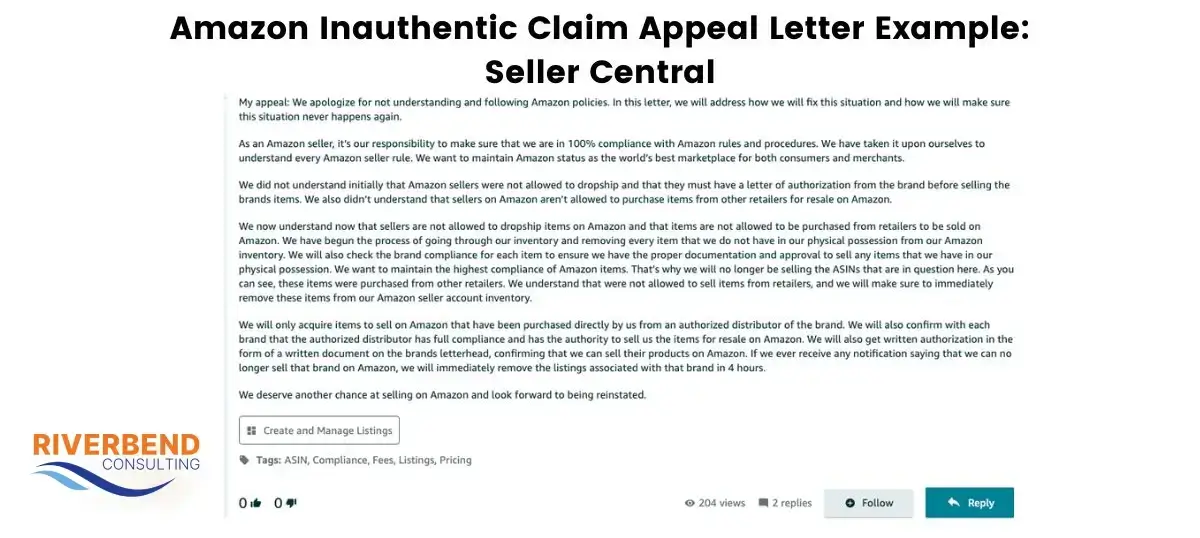
This is where the rubber meets the road. Amazon wants to see evidence that you understand the issue, have taken real action and have systems in place to prevent it from happening again. Think of your appeal as a business case, not a personal rant.
Here’s how to structure your Amazon inauthentic appeal letter:
1. Start with a short, direct introduction: Acknowledge the problem. Take ownership. Avoid blaming Amazon or the buyer.
2. Address the root cause: If you submitted invoices that weren’t up to par, say so. Explain what you’ve done to fix the issue. If the complaint was packaging-related, describe how you’ve improved shipping. Be honest, specific and solution-focused.
3. Include your updated invoices or supplier info: Attach invoices that are:
- Dated within 180 days
- From a recognized supplier or distributor
- Match the exact ASIN in question
- Show quantities consistent with your sales volume
Make sure the supplier’s name, address and contact information are clear. Consider including photos of the product, packaging and shipping labels.
4. Outline corrective actions taken
Explain how you’ve addressed the problem and prevented it from recurring. Keep it practical and action-based.
Consider implementing the following changes:
- Move to an authorized distributor with verifiable contact details
- Update your invoice documentation process
- Add a double-check system for listing accuracy and product matching
5. Close with a respectful request: End your letter professionally and clearly.
The entire letter should be concise, no more than one page. Avoid emotional language, blaming others, or overly long explanations. Keep the tone of your Amazon suspension appeal letter factual, respectful and businesslike.
How to prevent inauthentic claims going forward
If you’ve just survived an inauthentic claim, now is the time to tighten your operations. A single mistake can be forgiven, but repeated issues could put your account at serious risk, including Amazon account suspension. Prevention is easier than the appeals process, so let’s focus on long-term account health.
1. Vet your suppliers carefully
Work with manufacturers, distributors, or wholesalers with a strong paper trail. Ask upfront for invoices with proper formatting. Avoid platforms like Craigslist, flea markets, or unverified online resellers.
2. Keep meticulous records
Maintain a digital folder for every ASIN you sell. Include purchase orders, invoices, supplier contact info, product photos, and brand authorization letters. When Amazon requests documentation, you’ll be ready in minutes.
3. Double-check listing accuracy
Make sure the item you’re selling matches the ASIN 100%. That includes packaging, version, region and condition. Even minor discrepancies can trigger complaints.
4. Use FBA when possible
Fulfillment by Amazon helps ensure consistent packaging, fast shipping and proper labeling. While not foolproof, FBA orders generally result in fewer authenticity complaints than FBM.
5. Implement a QA process
Always inspect inventory before shipping. Many great third-party inspection providers will inspect your goods to help ensure top quality. Inspection considerations: Is the packaging sealed? Are the labels accurate? Is it free of cosmetic damage? These small steps can prevent customer confusion and negative reviews.
6. Respond quickly to complaints
If a customer reaches out with a concern, don’t ignore it. Address it immediately, issue refunds if needed and log the issue internally. A single complaint left unchecked can escalate into a suspension.
Preventing inauthentic claims helps you build a business that runs smoothly, professionally and sustainably on Amazon’s ever-evolving platform.
From panic to plan: Winning your inauthentic appeal and safeguarding your Amazon future
Getting hit with an inauthentic can feel disorienting, stressful and often unfair. But it doesn’t have to be the end of your journey. Many sellers successfully appeal Amazon inauthentic claims and come out stronger after they’ve been through the appeal process, because they learn how to shore up the weak spots in their business and build systems that truly support long-term success.
If you ever find yourself dealing with an account suspension and are unsure how to respond, don’t panic. Stay calm. Get organized. And if you need help, ask for it. We’re always happy to help.
Seller Account Health. Solved.
FAQ
Q: What is the most effective way to write an Amazon inauthentic appeal letter?
A: Keep it factual, calm, and focused on solutions. Don’t argue or get emotional. Amazon wants to see that you understand the issue, took action and have a plan to prevent it from happening again.
Q: What key elements must be included in a winning Amazon inauthentic appeal?
A: You need a short intro, a specific Plan of Action (POA), and solid documentation. If you miss any of those, your appeal can stall or be denied.
Q: How can I prove my products are authentic in an Amazon appeal?
A: Submit clear invoices that show the supplier’s info, item details, and order date. Add product photos, shipping labels, and anything else that proves your supply chain is legit.
Q: What’s the best format for an Amazon inauthentic appeal letter?
A:Use a clean, simple format:
- Brief intro
- What went wrong
- Your POA
- List of attachments
Keep it under one page and upload invoices as PDFs.
Q: How detailed should my Plan of Action be for an inauthentic appeal?
A: Be specific but not long-winded. Include 3–5 clear steps you’ve already taken. Avoid vague promises, focus on real changes you’ve made.
Q: What evidence does Amazon require to approve an inauthentic appeal?
A: Valid invoices are key. Also include supplier contact info, product photos and a brief explanation of how you source and ship inventory.
Q: How do I get my supplier invoices ready for an inauthentic appeal?
A: Make sure they’re typed, dated within 180 days and show full supplier info. The item description should match the ASIN exactly. If anything is missing, ask your supplier to revise it.
Q: What mistakes should I avoid in my Amazon inauthentic appeal letter?
A: Don’t blame Amazon or get emotional. Avoid vague language, missing documents, and copy-paste templates. Keep it professional and personalized.
Q: How long does Amazon take to respond to an inauthentic appeal?
A: Most appeals get a response in 2–3 business days. Be patient—sending multiple follow-ups can slow things down. If you don’t hear back in five days, then check in.
