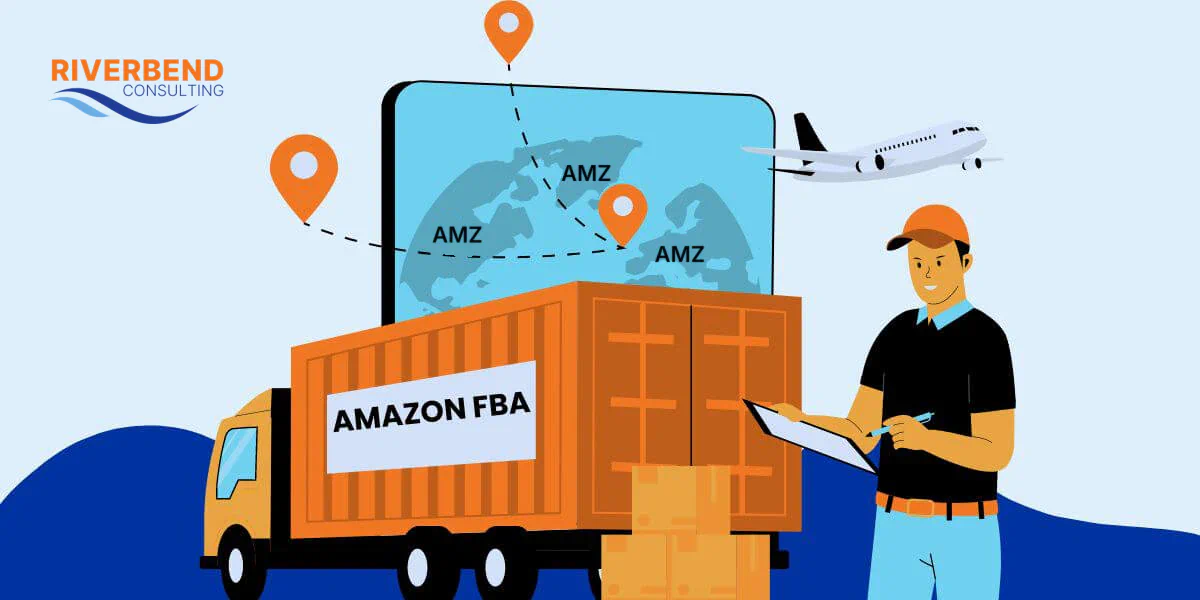
Amazon FBA shipping and logistics are the backbone of your Amazon business. Efficient logistics helps ensure your products reach customers on time, inventory levels are optimized and seller performance metrics are healthy. Perfecting an Amazon FBA logistics strategy can be complex, with shifting consumer demand, evolving seller policies and rising shipping costs. Improving your logistics strategy is vital to your long-term success on Amazon.
What does logistics mean for Amazon sellers?
For Amazon sellers, logistics encompasses overseeing product movement from the supplier or manufacturer to the customer’s doorstep. This includes Amazon FBA shipping, managing inventory and ensuring timely deliveries. Within Amazon’s ecosystem, logistics involves coordinating efficient inventory management for Amazon sellers, shipping, packaging and return handling, often through Amazon’s FBA (Fulfillment by Amazon) service.
Why is a strong FBA logistics strategy important?

Logistics goes beyond simply shipping products; it impacts every aspect of an Amazon business, including inventory management, fulfillment, customer satisfaction and profit margins. Efficient logistics helps improve customer satisfaction by ensuring that products are delivered quickly and without issues, boosting positive feedback and enabling you to avoid performance notifications that can affect your Amazon seller account health.
Streamlining Amazon FBA shipping and fulfillment reduces costs by lowering storage, shipping and return fees. A well-managed logistics strategy ensures optimal inventory levels, preventing stockouts or overstocking, which can negatively impact your profitability.
How to optimize your logistics strategy
Optimizing your logistics strategy goes beyond coordinating shipments—it requires strategic decisions that align with your business goals, customer expectations and operational efficiency. Effective logistics optimization ensures products are moved, stored and delivered in a timely, cost-effective manner without bottlenecks. A robust logistics strategy keeps the entire supply chain running smoothly, from warehousing to final delivery.
#1 Optimize your inventory strategy
- Use the Inventory Performance Index (IPI) as a benchmark: Start by utilizing tools like Amazon’s IPI, which helps track the health of your inventory based on factors like excess stock, sell-through rates and stranded inventory. A higher IPI score means you’re managing inventory efficiently, reducing storage fees and improving restock opportunities. Incorporate demand forecasting into your strategy, taking into account historical sales data, seasonal trends and marketplace dynamics to ensure you always have the right products on hand without risking stockouts.
- Leverage just-in-time (JIT) inventory: Beyond tracking inventory, optimizing your strategy also involves using Just-in-time inventory, where you send stock to fulfillment centers as needed, reducing long-term storage costs.
- Automate inventory tracking: Finally, diversify your storage options. Amazon offers solutions like Amazon Warehousing and Distribution (AWD), which allows for low-cost, long-term storage of bulk inventory, reducing your storage fees compared to standard FBA options. Flexibility can help you maintain the proper inventory levels, especially during peak seasons and can help keep your logistics strategy adaptable to demand fluctuations.
By aligning inventory management with an optimized strategy, you create a seamless supply chain that enhances profitability and operational efficiency.
#2 Choose the proper FBA warehouses for your logistics needs
Amazon has over 175 fulfillment centers worldwide. Where your products are stored impacts shipping speeds, costs and customer satisfaction. Optimizing warehouse selection can streamline your logistics process.
- Amazon’s distributed inventory model: Sellers can use Amazon’s inventory placement service to split shipments across multiple warehouses. While this incurs additional fees, it reduces delivery times and shipping costs by storing products closer to the customer.
- Inventory Placement Service (IPS): IPS allows sellers to send all product units to a single fulfillment center and Amazon distributes them across its network. This can simplify logistics, but the additional costs must be carefully evaluated against the benefits of centralized shipping.
- Leverage regional fulfillment networks: Consider sending inventory to fulfillment centers near areas of high demand. This can reduce shipping times for Prime members and minimize your costs. Use Amazon’s Seller Central data to identify where most of your orders originate.
#3 Reduce FBA fees by maximizing Amazon FBA shipping efficiency
Shipping costs are one of the most significant expenses in an FBA business. Streamlining shipping processes can impact profitability, especially if you sell large or heavy items. Try these tactics to reduce your shipping costs:
- Use Amazon’s partnered carrier program: Amazon offers discounted shipping rates through its partnered carriers, such as UPS and FedEx. This program can save money on inbound shipments to fulfillment centers and returns.
- Leverage freight forwarders: Consider working with a freight forwarder specializing in Amazon FBA shipments for large shipments, especially international orders. They help with customs clearance, shipping consolidation, and even compliance issues to reduce shipping errors.
- Ship in full pallets where possible: For large sellers, shipping products in full pallets rather than individual boxes can lower per-unit shipping costs. Full-pallet shipping also ensures faster processing at fulfillment centers.
#4 Improve forecasting to avoid stockouts and overstocking
Accurate forecasting is key to reducing logistical disruptions. With a solid forecasting strategy, you may avoid stockouts that harm your seller metrics or overstocking, which leads to higher storage fees.
- Use Amazon’s demand forecasting tools: Amazon provides sellers with forecasting tools based on historical sales data, seasonality and trends. Leverage these insights to forecast demand and plan your replenishments accordingly.
- Monitor seasonal trends: Ensure you account for seasonal fluctuations in demand. For instance, if you sell holiday-related products, adjusting inventory levels several months in advance is important.
- Outsource forecasting to a specialist: If forecasting is a weak spot in your business, consider working with a third-party supply chain expert to analyze your sales data and develop reliable forecasting models tailored to your business.
#5 Improve handling of returns and reverse logistics

Efficient return handling is essential for a successful Amazon FBA logistics strategy because returns are a key part of the customer experience and can have significant cost implications. Poor return management can delay reprocessing products, resulting in negative reviews and reduced customer satisfaction. For FBA, this also means incurring additional fees for long-term storage and return processing, which can quickly add up.
Streamlining your return process within Amazon FBA helps minimize costs by ensuring that returned products are inspected, processed, and made available for resale as quickly as possible.
- Use automated return processing: Amazon offers automated return processing, but managing returns manually can help reduce unnecessary returns. Review your return policy and ensure that your products are correctly described on the listing detail page to minimize complaints of “return due to incorrect items.
- Manage reverse logistics with a third-party provider: For high return volumes, using a third-party logistics (3PL) provider can help streamline the reverse logistics process. These providers specialize in returns management and can refurbish returned products for resale, reducing overall loss.
- Minimize returns through quality control: Conduct regular quality control checks on your products to ensure they match customer expectations. Returns due to product defects can hurt your feedback ratings and increase FBA fees.
#6 Leverage multi-channel fulfillment (MCF) for additional sales channels
Amazon’s Multi-Channel Fulfillment (MCF) allows you to fulfill orders across multiple platforms, using Amazon’s FBA network for non-Amazon sales. This is a great way to optimize logistics if you also sell on platforms like Shopify, eBay, or your own website.
Benefits of MCF:
- Reduce overhead costs: By using Amazon’s MCF, you can reduce the need for separate warehouses or third-party fulfillment services. All inventory is stored in Amazon’s warehouses, and MCF uses the same shipping processes as FBA, ensuring fast and reliable fulfillment.
- Consolidate inventory: By consolidating all inventory under one roof, you can reduce the complexity of managing stock across different platforms. Consolidating inventory can also minimize shipping errors and improve your inventory accuracy.
How to leverage data and automation for smarter logistics
One of the biggest changes for Amazon FBA is the increased reliance on data analytics and automation tools to optimize logistics and supply chain management. You now have access to advanced reporting tools that provide real-time insights into sales, inventory levels and customer behavior. Automated tools allow you to make more informed decisions about how to manage inventory, adjust prices and plan for restocking.
For example, sellers can use Amazon’s reporting tools or third-party analytics platforms like Helium10 to track customer demand trends and automate replenishment orders based on real-time sales performance. This prevents stockouts while reducing the risk of overstocking, which can lead to high storage fees.
By integrating automated systems into your logistics strategy, you can receive notifications about low inventory, automatically trigger restocking orders and optimize shipping routes, ensuring faster delivery times. This reduces manual oversight, saves time and boosts overall efficiency.
Can Amazon Global Logistics help improve your logistics strategy?

One of the significant challenges in 2024 involves the new fee structure tied to Amazon Global Logistics (AGL), which is part of Amazon’s Supply Chain by Amazon service. AGL is essentially a door-to-door ocean freight transportation program that enables you to ship inventory directly from manufacturers, often in China, to Amazon fulfillment centers. While this may seem like an attractive option with its “competitive rates,” the reality is that these rates often disguise additional costs.
The truth is, many of the Amazon fee increases in 2024 are linked to Amazon’s promotion of its AGL service. You are now required to distribute your inventory across multiple fulfillment centers instead of sending everything to one primary location, a major shift from previous years. As a result, you incur new placement fees based on how many fulfillment centers Amazon assigns, which can drive up costs. Amazon’s method, promoting AGL as a solution, can leave you grappling with fewer cost-effective options.
While AGL is marketed as a streamlined logistics service, you may actually find it isn’t the cost-saving measure it appears to be, especially when comparing it with alternatives like using third-party logistics (3PL) partners or independent freight forwarders. Before committing to AGL, thoroughly analyze your costs, considering placement fees, warehousing expenses and the overall impact on your profit margins. In many cases, 3PL providers or freight forwarders may offer better rates, flexibility and control over your shipment process.
Why compliance is key to logistics success on Amazon
Compliance with Amazon’s updated shipping and packaging standards is crucial to avoid penalties and account suspensions. Follow these strict guidelines to prevent issues like damaged goods and delayed shipments, which can harm seller performance and lead to customer dissatisfaction.
What to avoid:
- Inadequate packaging: Incorrect packaging leads to damaged products, higher returns, and negative feedback. Use durable packaging, especially for fragile items and try cost-effective packaging solutions for Amazon FBA to manage margins better.
- Neglecting Amazon’s SIPP Program: The SIPP program offers fee reductions, but if packaging doesn’t meet Amazon’s strict standards, you risk additional fees and product damage during transit.
- Delayed shipments: Missing shipping deadlines, especially for Prime-eligible products, can hurt performance metrics. Optimizing inventory and partnering with reliable carriers is essential to meeting Amazon’s strict delivery promises.
- Hazmat non-compliance: Ensure compliance with Amazon’s hazardous material guidelines to avoid fines and product removal from FBA centers.
Adhering to these standards, along with constant monitoring of returns and feedback, ensures better performance ratings, fee reductions and a smoother logistics experience.
Is your Amazon seller account suspended due to logistics and shipping violations?
If you violate Amazon’s strict performance metrics related to late shipments, missed delivery promises, or mishandled inventory management, you can quickly find yourself facing warnings or Amazon seller account suspension. These violations can stem from logistical challenges, such as inventory shortages, mismanaged fulfillment strategies, or issues with adhering to Amazon’s shipping standards.
At Riverbend, our team of experts can provide detailed logistics guidance on how to:
- Diagnose the root cause of the account suspension:You can face account suspensions due to logistics failures like chronic late shipments or an inability to meet Prime shipping promises. We work with you to understand exactly which violations triggered the suspension and develop a plan to address them.
- Develop corrective action plan: Amazon expects you to provide a comprehensive Plan of Action (POA) addressing the root cause that led to the breach. Riverbend Consulting crafts POAs with specific attention to logistics-related suspensions. We can recommend strategic changes to inventory management, shipping workflows and fulfillment center choices, ensuring you inform Amazon to prevent future suspensions.
- Amazon problem solving: Through guidance on better inventory forecasting, efficient use of Amazon’s Inventory Placement Service, and streamlined logistics practices, Riverbend helps you avoid breaches caused by logistical inefficiencies. Our experts can also advise on the use of external fulfillment services if a seller’s in-house processes are underperforming.
- Ongoing support for performance improvement: Once an account is reinstated, Riverbend continues to provide support, helping you improve your metrics by implementing best practices in logistics management. This reduces the risk of future suspensions and enhances the your reputation with Amazon.
Our tailored Amazon problem solving solutions help you meet shipping and fulfillment requirements while navigating Amazon’s complex performance metrics.
Improving your Amazon FBA logistics strategy isn’t a one-size-fits-all approach
Carefully consider your unique product mix, customer base and financial goals to develop a logistics strategy that optimizes your Amazon FBA shipping and operations. From better inventory management to more efficient shipping practices, these strategies can help you reduce costs and improve customer satisfaction. In the ever-evolving world of Amazon FBA, being adaptable, proactive and data-driven is key.
Seller Account Health. Solved.