
This guest blog is written by Manish Chowdhary of Cahoot, a Riverbend Consulting partner.
In the world of e-commerce, the magic of free and fast shipping reigns supreme. For modern shoppers, the allure of Prime delivery, with its promise of swift one or two-day shipping, often seals the deal when making a purchase.
In the past, only the big players could afford the luxury of multiple warehouses dedicated to fast shipping for their Shopify sites. However, recent changes to Amazon’s Seller Fulfilled Prime (SFP) program have opened up new opportunities for sellers. Approved Amazon sellers can now tap into their own fulfillment centers to fulfill Prime orders, ushering in a new era of competitiveness, operations freedom, and flexibility.
Understanding Seller Fulfilled Prime Fulfillment
Seller Fulfilled Prime (SFP) fulfillment is Amazon’s Fulfilled By Amazon (FBA) alternative program that empowers sellers to deliver directly to domestic Prime customers from their own warehouses. With SFP, sellers can proudly display the coveted Prime branding and offer one-day and two-day delivery at no extra cost for Prime customers. Professional sellers can apply for a 30-day trial period and, upon approval, become enrolled SFP sellers.
SFP has emerged as a game-changer, especially amidst recent changes to Amazon’s Fulfilled by Amazon’s (FBA) program. With new fees hitting sellers, like inbound placement and low-inventory-level fees, SFP offers a desirable alternative. It’s not just about saving on the high FBA fees; it’s about liberation. SFP allows sellers to provide fast shipping not only on Amazon but they can use the same Amazon SFP 3PL Fulfillment Service infrastructure to delight customers on other platforms like Shopify, Magento, BigCommerce, Walmart, eBay, Macy’s, Best Buy, and Target.
Why is Fast Shipping So Important?
Fast and free shipping continues to dominate conversion, extending beyond Amazon’s borders. According to a 2023 survey by Maergo, delivery date concerns prompted 28% of customers to abandon their carts. Additionally, thanks to the Amazon standard, 19% of US customers now expect free two-day shipping.
Slow shipping is a tough sell when alternatives offer speedy delivery. Many platforms, like Walmart, Best Buy, and Target, now offer delivery speed filtering options on their websites. For instance, Walmart’s Two-Day and Three-Day Delivery programs, akin to Seller Fulfilled Prime, emphasize the importance of rapid delivery.
Requirements for Seller Fulfilled Prime Fulfillment
After years of exclusivity, Amazon opened the Seller Fulfilled Prime Fulfillment program to professional sellers in October 2023. To qualify, sellers must meet certain criteria, including:
- Free one-day and two-day delivery for Prime customers
- Free nationwide standard shipping for all customers
- Meet minimum thresholds for one-day and two-day delivery speeds as viewed by Prime customer detail page views
- An on-time delivery rate of at least 93.5%
- A valid tracking rate of at least 99%
- A seller-initiated cancellation rate of less than 0.5%
- Ship and deliver Prime orders on weekends (Saturday, Sunday, or both)
- Offer Free Returns on items weighing under 50 lb
- All post-order customer service inquiries are managed by Amazon
How Does SFP Delivery Speed Metrics Work?
Achieving and maintaining eligibility for Seller Fulfilled Prime revolves around one crucial metric: delivery speed. While it might seem straightforward, factors like order cut-off times, weekend operations, and holidays impact delivery promises. Even with expedited shipping options, hitting the one-day and two-day delivery targets isn’t guaranteed.
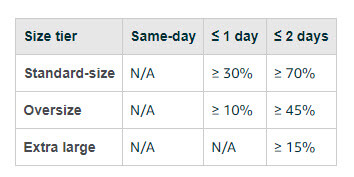
Your listing might be set up for one-day or two-day delivery, yet display a longer delivery promise—like 3, 4, or even 5+ days to the customer. Why? Factors like order cut-off times, seller and carrier weekend operations, and holidays come into play. So, even if a seller chooses to use only expedited shipping (overnight or 2-day air services like FedEx OneRate), hitting the one-day and two-day delivery metric isn’t guaranteed.
Picture this: a Prime shopper visits a product listing on Amazon and spots “Free delivery Tomorrow. Order within 2 hours.” If the customer makes the purchase within that window, the order ships out the same day and arrives at the buyer’s doorstep the next day. That particular page view meets both one-day and two-day delivery promises.
But let’s say the Prime shopper visits the product listing after your warehouse’s daily cut-off time. They won’t see “Free delivery Tomorrow.” Instead, they will see the delivery date as the day after tomorrow. This page view does not meet the one-day delivery promise but the two-day delivery promise.
Below is an illustration of how delivery speed metric achievement varies depending on when the listing is viewed (assuming every order ships using overnight shipping):
| Example 1 | Example 2 | Example 3 | |
|---|---|---|---|
| When is it viewed | Monday 1 pm | Monday 5 pm | Saturday 5pm |
| Ships on | Monday | Tuesday | Next Monday |
| Delivers on | Tuesday | Wednesday | Next Tuesday |
| One-day or less promise | ✓ | ✕ | ✕ |
| Two days or less promise | ✓ | ✓ | ✕ |
Meeting Delivery Speed Metrics
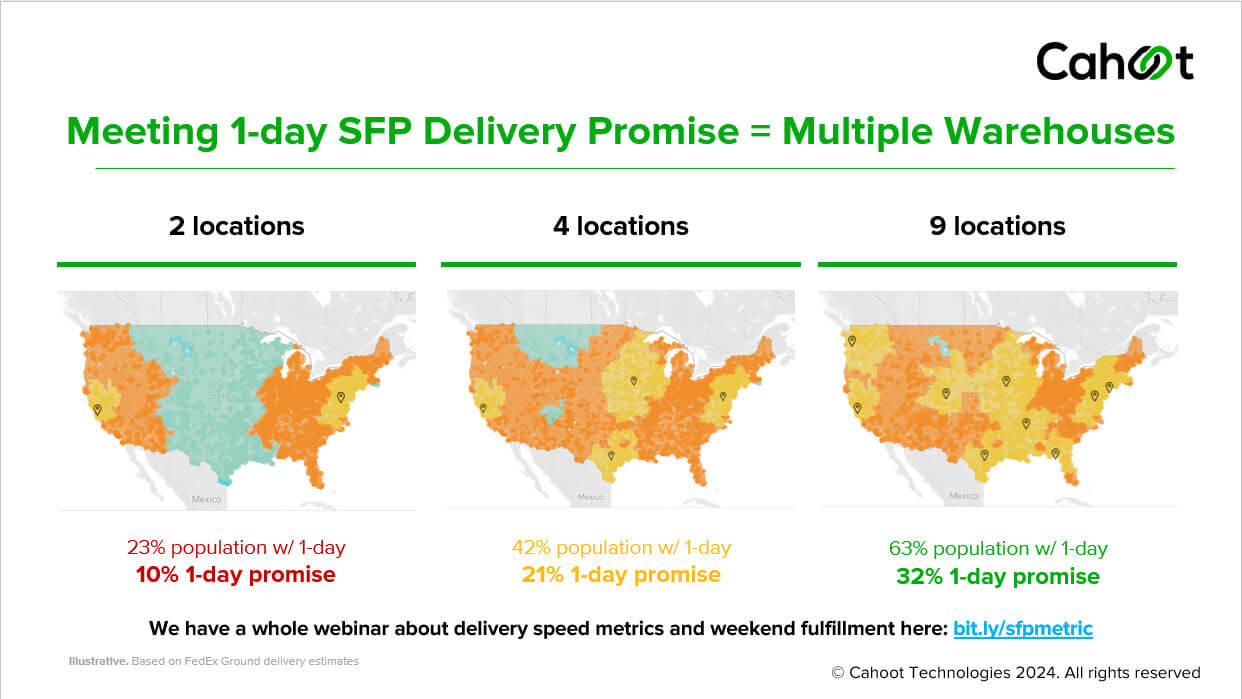
To meet delivery speed targets, sellers need a strategic setup, which may include Amazon SFP 3PL, such as Cahoot, which operates multiple strategically located SFP fulfillment centers. Swift order processing and dispatch using economical ground services like UPS or FedEx Ground is only possible when the inventory is placed in SFP-compliant fulfillment centers that operate at least six days a week and offer late cutoffs besides Amazon integration technology excellence. More SFP fulfillment warehouses mean quicker and more cost-effective deliveries, improving seller competitiveness.
What is the On-Time Delivery Metric for SFP?
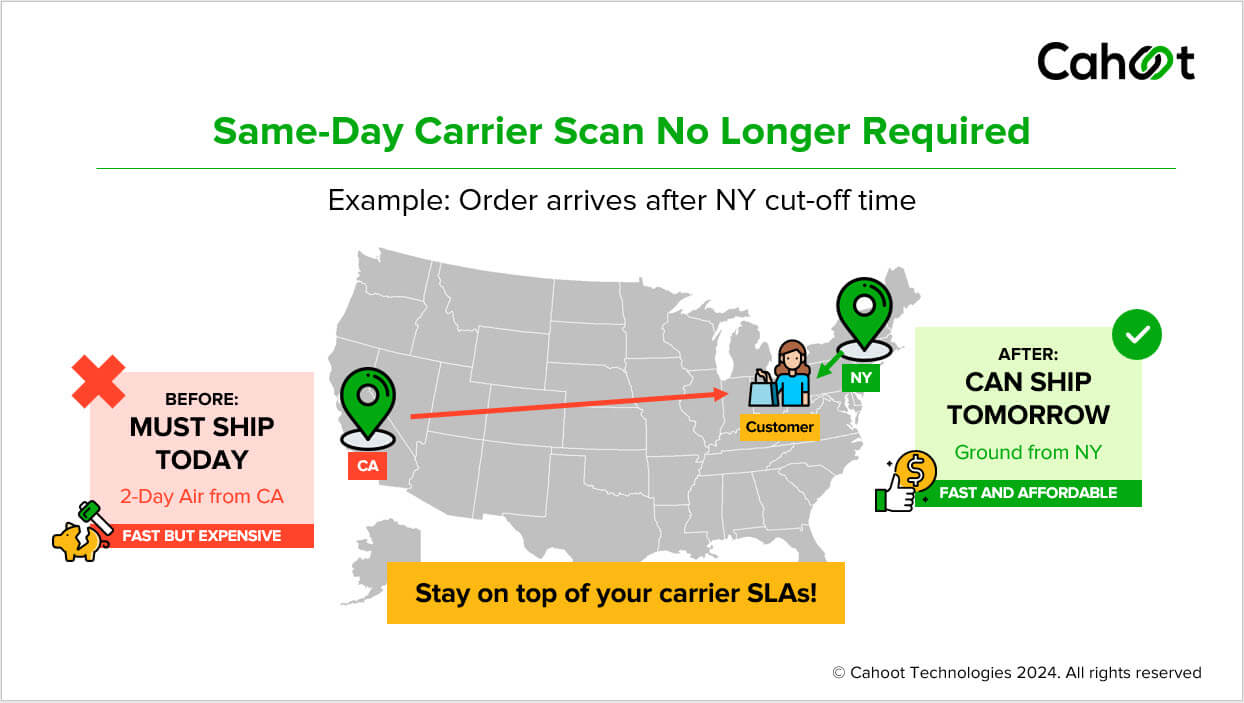
Amazon changed its requirements from same-day carrier origin scans to tracking on-time delivery. This positive change offers sellers more flexibility in shipping. For instance, an SFP 3PL fulfillment service provider with warehouses in different geographies nationwide can now opt for economical ground shipping instead of costly air services without sacrificing delivery times.
Let’s break it down with an example. Imagine an Amazon SFP 3PL with warehouses in California and New York. A customer in Pennsylvania places an order at 4 PM ET on a Monday, expecting delivery by Wednesday. Previously, the 3PL would have had to ship from the California warehouse using costly two-day air service. But with the focus now on on-time delivery, the SFL 3PL can opt for economical ground shipping and ship the item the next day instead.
SFP Success Requires a Reliable Fulfillment Partner
Expanding SFP fulfillment infrastructure can be a significant challenge for businesses of all sizes, both financially and operationally. From securing adequate space to managing inventory and staffing, the costs and complexities involved can be daunting.
However, there’s a solution that offers a more efficient and cost-effective approach: partnering with third-party logistics (3PL) companies like Cahoot. These select Amazon SFP 3PL providers specialize in managing logistics, offering services to support the demanding Seller Fulfilled Prime (SFP) requirements. With their expertise and resources, including strategically located warehouses and advanced inventory management systems, 3PL companies such as Cahoot alleviate the burden of program oversight, management, and expansion while ensuring defect-free order fulfillment.
Additionally, their flexible operations, including weekend availability, extended cutoff times, and discounted shipping options, allow Amazon SFP and Walmart fast shipping sellers to maintain competitive pricing while effectively meeting the stringent SFP standards.
SFP is a Powerful Seller Tool
The importance and impact of fast and dependable shipping cannot be overstated. As shoppers increasingly prioritize convenience and speed, Seller Fulfilled Prime (SFP) emerges as a powerful tool for sellers looking to grow their sales and gain market share.
With strategic partnerships with SFP third-party logistics (3PL) providers, Sellers can enhance their fulfillment capabilities and drive growth in an environment where costs have gone up across the board from inventory and labor to transportation. Embracing innovative solutions like SFP will be crucial for sellers to stay competitive and meet the evolving needs of today’s demanding consumers.