If you’re selling on Amazon, product reviews aren’t just feedback; they’re the foundation of your brand’s reputation, sales performance, and long-term success. In an ecosystem where customers often make purchasing decisions in under 30 seconds, reviews function as digital word-of-mouth. They build trust, influence rankings, and can make the difference between a product that thrives and one that gets buried under competitors.
Unfortunately, many sellers either underestimate the value of reviews or take shortcuts that put their accounts at risk.
At TraceFuse, we specialize in helping sellers unlock the full potential of their product reviews in an ethical, efficient, and at-scale way. In this guide, we’ll walk through the essentials of Amazon reviews, share real-world strategies for building and protecting your reputation, and explain how a proactive review management strategy can drive sustainable growth.
Why Product Reviews Matter More Than Ever
Amazon’s algorithm favors listings that convert, and nothing drives conversions like strong, positive social proof. Product reviews are one of the most important metrics influencing both customer behavior and Amazon’s internal systems. Here’s what your Amazon reviews impact:
- Conversion Rate: Listings with 4+ star averages and high review volume convert up to 20% better.
- Organic Rank: Amazon rewards well-reviewed products with better placement in search results.
- Featured Offer (formerly Buy Box) Share: Good reviews improve seller health, which is one of many Featured Offer variables.
- PPC ROI: Sponsored Products campaigns perform significantly better when the ad leads to a product with strong reviews.
- Brand Credibility: Customers perceive reviews as unbiased third-party validation, which is something your copy can’t replicate.
While price, availability, and shipping times matter, reviews are the tipping point for most customers.
Amazon’s Review Policies: Know the Rules
Amazon is increasingly using machine learning on top of its support team’s manual reviews to detect patterns of abuse, and enforcement has become more aggressive. When it comes to asking for reviews for your products, understanding and complying with Amazon’s guidelines is non-negotiable unless you’re ready to risk a suspended or even banned account.
Keep these “can’t dos” in mind to stay on Amazon’s good side:
- Incentivize Reviews: Offering discounts, gifts, or compensation for reviews (even “honest” ones) is prohibited.
- Manipulate or Filter Feedback: Asking only happy customers for reviews or attempting to “gate” feedback is not allowed.
- Solicit Specific Ratings: Phrases like “Leave us a 5-star review” violate Amazon’s community guidelines.
- Review Your Own Products: No reviews from sellers, family, friends, or employees.
- Use Third-Party Review Farms: Services that promise quick, bulk reviews can lead to suspensions or review wipes.
The Product Review Lifecycle: Stage-by-Stage Strategy
The journey from zero reviews to a trusted, high-converting product doesn’t happen by accident. From gaining initial traction to fending off competitors, here’s how to manage reviews at every phase of the product lifecycle.
1. Launch Stage
The biggest challenge here is visibility. Without reviews, customers hesitate to buy. Without purchases, you don’t get reviews. It’s a catch-22.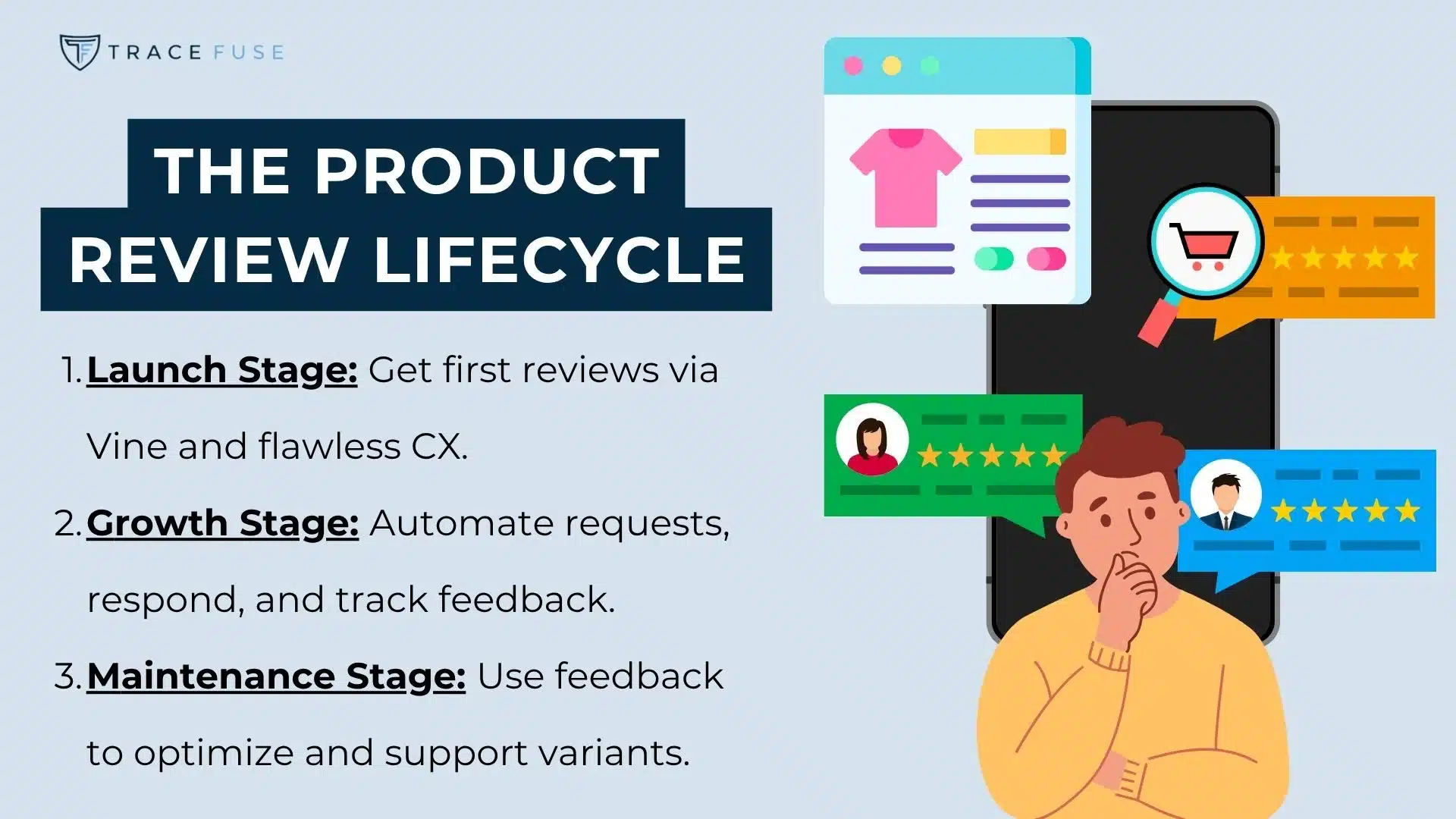
Best Practices:
- Leverage Amazon Vine: Eligible sellers can enroll ASINs and receive reviews from Amazon-vetted users.
- Use the ‘Request a Review’ Button: Amazon’s built-in, compliant method triggers a review and seller feedback request.
- Deliver a Flawless Customer Experience: Packaging, instructions, and unboxing all contribute to perceived product value and review likelihood.
2. Growth Stage
At this point, your new-ish product now has 10–50 reviews and is starting to gain momentum. This is where consistency becomes the priority.
Best Practices:
- Automate Review Requests: Use TraceFuse to trigger time-optimized requests for every eligible order.
- Monitor and Respond to Reviews: Engaging with reviews (especially negative ones) demonstrates brand accountability.
- Track Sentiment Trends: Use analytics to understand what customers love (or hate) about your product.
3. Saturation and Maintenance Stage
At this point, you’re established, but the competition hasn’t gone away. Maintaining velocity is key.
Best Practices:
- Refresh Listings Based on Feedback: Use approved sentiment analysis tools to identify product issues and update listings accordingly.
- Retarget Past Buyers (Compliantly): Reach out through Amazon’s tools to encourage satisfied customers to leave a review.
- Launch Strategic Variants: Use review equity from one ASIN to support similar new SKUs via product variation listings (where appropriate and allowed).
Managing Negative Reviews: Risk vs. Opportunity
In the course of selling on Amazon, one-star reviews are inevitable even with the best products. What matters is how you handle them.
Do:
- Analyze the Cause: Identify common triggers behind poor reviews. Do customers consistently mention a packaging issue or confusing instructions? That’s a valuable point for improvement which you can address to improve customer satisfaction down the line.
- Respond (When Appropriate): Public responses show future buyers you care.
- Report Inappropriate Content: If a review violates Amazon’s guidelines (e.g., it includes personal info or is unrelated to the product), flag it through Seller Central.
Don’t:
- Contact reviewers directly (outside Amazon’s messaging system)
- Try to “bribe” them to remove or change their review
- Ignore recurring complaints that signal product flaws
Proactive negative review management isn’t just about damage control. Think of it as a path to product improvement and long-term brand trust.
Common Pitfalls in Review Management
Even experienced sellers make mistakes that cost them reputation and revenue. Here are some of the most common issues that a good review management system and third-party services can help correct:
- Over-reliance on Black-Hat Tactics: Fast review accumulation through illegitimate means can get you banned overnight.
- Inconsistent Requesting: Sometimes buyers are more than happy to review your product, but they forget because they’re busy and don’t get any reminders. Make sure you ask for a review after a reasonable period for them to try your product. Forgetting to ask for feedback after certain orders leads to missed opportunities for building trust and credibility.
- Ignoring Neutral Feedback: 3-star reviews often contain gold. While they’re not a wholehearted vouch for others to buy, they have insightful, honest commentary that points to minor but fixable issues.
- Failure to Scale: As volume grows, manual methods break. Without automation, review management becomes reactive rather than strategic.
Advanced Tactics for Review Optimization
Once you’ve got the basics down, these more sophisticated strategies can set your brand apart.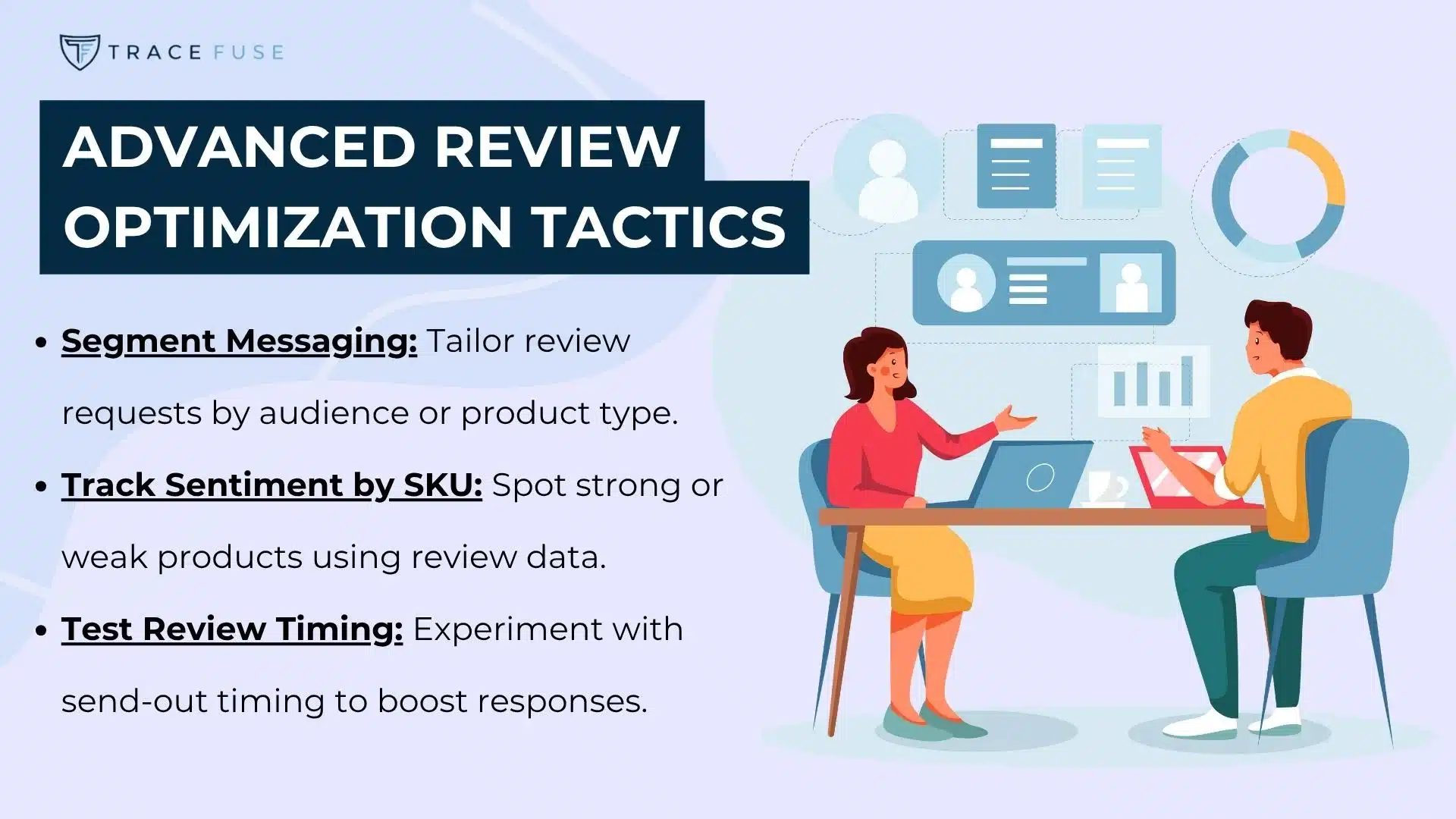
1. Dynamic Messaging Segments
If you target different market segments because of your product range, sending the same message may not be that effective at appealing to someone for a review.
Remember: different audience segments have different pain points, and the stronger you can appeal to their specific concerns or needs, the better a result you’ll get. Sellers can segment customers based on order data and product type, ensuring more personalized (but compliant) review requests.
2. SKU-Level Sentiment Scoring
Not all products perform equally. Advanced sentiment tracking at the SKU level can help you:
- Identify winning variants
- Pinpoint failing ASINs before they hurt your brand
- Allocate ad budget more efficiently
3. A/B Testing Review Timing
The smallest changes to your request phrasing or send-out time could make a difference in the likelihood of getting a review. Try experimenting with the timing of review requests such as 2 days after delivery vs. 5 days. This could help you determine when customers are most likely to leave positive feedback.
TraceFuse: The Smart Way to Protect Your Amazon Reputation
Fake and manipulated reviews can destroy months of hard work overnight, but fighting them manually is time-consuming and often ineffective. TraceFuse was built to eliminate the guesswork from review protection, offering expert identification, documentation, and removal of policy-violating reviews.
Our key services include:
- Expert Review Analysis: Our team identifies reviews that violate Amazon’s Terms of Service using the latest detection methods.
- Professional Documentation: We gather compelling evidence and build strong cases for Amazon’s review team.
- Persistent Follow-Up: We handle all communication with Amazon until policy-violating reviews are removed.
- Full Catalog Protection: Comprehensive review audits across your entire product line to catch hidden violations.
Our white-hat approach is trusted by successful sellers and brands who refuse to let fake reviews sabotage their reputation or sales. We protect your business without violating platform rules or using questionable tactics.
The Future of Review Management
The landscape is evolving. Here’s what Amazon sellers should be prepared for in the coming years:
- Tighter Compliance: Amazon is cracking down harder than ever on suspicious activity. Future enforcement will be faster, smarter, and more automated.
- More AI-Powered Detection: Fake reviews, whether positive or negative, will be flagged more easily by Amazon’s algorithms.
- Customer Review Video Integration: As visual content becomes more prevalent, expect to see more video reviews influencing purchase decisions.
- Voice and Mobile Trends: With more shopping happening on mobile and voice platforms, reviews will be condensed, highlighted, or summarized, making average rating and first impressions even more critical.
Staying ahead of these trends means investing in tools like TraceFuse now, before the curve steepens.
Final Thoughts
Product reviews are more than just a metric; they’re a mirror of your customer experience, product quality, and brand promise. For Amazon sellers, they’re also a high-stakes game: ignore them, and you risk stagnation; try to cheat, and you risk suspension.
But when managed properly, reviews become a growth engine that will fuel conversions, improve rank, and reinforce customer loyalty. TraceFuse is here to help you with review management to make that transformation possible.
We’ll scan your product listings for non-compliant negative reviews and report them to Amazon ASAP, then continue following up for their removal. The result? A clean review profile that lets genuine feedback shine. If you’re ready to take control of your reviews and build a brand that customers trust, let the TraceFuse team power your strategy.
