With ever-changing policies, a competitive landscape, and stringent compliance requirements, Amazon sellers often grapple with metrics they don’t fully understand. One such metric is “At Risk Sales.” If you’ve seen this value pop up in your seller account, you’re not alone in wondering what it means and how it impacts your business. This blog breaks down the concept of at risk sales on Amazon, explores its connection to compliance and provides actionable steps to keep your sales safe.
What is compliance on Amazon?
Staying compliant on Amazon is the foundation of a successful, long-term business. Amazon’s marketplace is built on strict policies and legal requirements designed to maintain fairness, safety and trust buyers and sellers. Ignoring these rules puts your account, sales and reputation at risk.
By proactively following Amazon’s compliance standards, you can protect your business from disruptions, maintain strong account health and maximize your sales potential.
Here are some key areas of compliance:
- Product authenticity: Ensuring the products you sell are genuine and not counterfeit.
- Listing accuracy: Providing clear, truthful and detailed information about your products.
- Fulfillment standards: Meeting Amazon’s guidelines for timely and accurate order fulfillment.
- Intellectual property rights: Respecting trademarks, copyrights and patents.
Compliance ensures you’re playing by the rules, which is crucial for maintaining your account’s health and reputation.
Why compliance on Amazon is important
Compliance might feel like an overwhelming set of rules, but its importance runs deeper. It’s the engine that keeps your Amazon business running smoothly and competitively. Sellers who prioritize compliance are positioning themselves for long-term success in an ever-changing marketplace.
- Preserve account health: A compliant account maintains a positive standing, reducing the risk of suspensions or listing removals. Healthy accounts also gain access to key Amazon services like Sponsored Ads, enhancing visibility and sales.
- Builds customer trust: Compliance ensures customers receive accurate product descriptions and high-quality goods, fostering loyalty and repeat purchases. Building a brand is easier when your reputation is backed by consistent, policy-abiding practices.
- Enhances search rankings: Amazon’s algorithm favors compliant listings, resulting in better placement in search results and greater exposure to potential buyers.
- Reduces operational risks: By staying compliant, you avoid costly disruptions like legal disputes, fines, or forced account closures.
- Promotes long-term growth: Compliance creates a stable foundation, enabling you to scale your business without unnecessary setbacks.
Aligning your practices with Amazon’s standards creates opportunities for growth and reliability in a competitive marketplace.
What happens if your account isn’t compliant?
When Amazon’s standards are violated, the consequences can ripple through every aspect of your operations. When your account isn’t compliant, Amazon’s systems flag it, which can lead to serious consequences, including:
- Amazon account suspension: One of the most severe outcomes. Without a compliant account, you could lose your ability to sell entirely.
- Listing removal: Non-compliant products may be delisted, leading to loss of visibility and revenue.
- Fines or legal action: In extreme cases, selling prohibited or misrepresented items could result in legal consequences.
- Restricted access to services: Amazon might limit access to tools like Sponsored Ads, significantly affecting your growth.
Staying vigilant about your account health is critical to avoid these pitfalls.
What does the “At Risk Sales” value mean in the performance section of Amazon Seller Central?
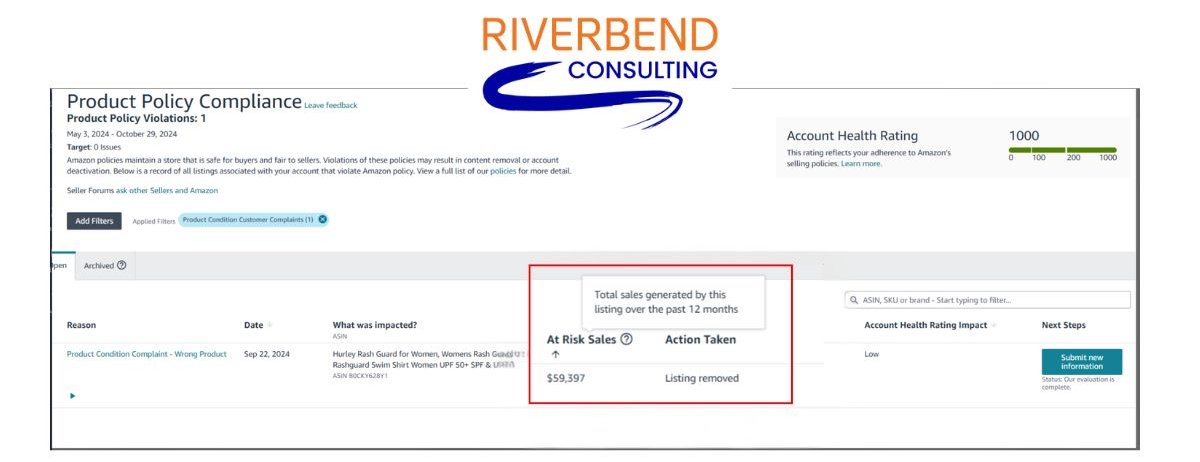
The “At Risk Sales” value in Amazon Seller Central is the portion of your revenue associated with listings or actions that Amazon has flagged for non-compliance. This value highlights the sales volume that could be at risk if these issues are not resolved promptly. It’s Amazon’s way of showing you the tangible impact of compliance lapses, giving you a clear picture of what’s at stake.
While it may seem daunting, the “At Risk Sales” metric is an opportunity to take corrective action before more severe penalties, such as listing removals or account suspensions, occur. This value is a tool to help you prioritize and address the most pressing compliance concerns. Here’s what “At Risk Sales” typically indicates:
- Policy violations: Listings flagged for inaccurate product details or prohibited content.
- Customer complaints: Negative feedback or A-to-Z claims related to your products.
- Regulatory non-compliance: Failure to meet safety or labeling standards.
Amazon calculates this value to give you a clear picture of the revenue at stake if issues remain unresolved.
The at risk sales on Amazon value can be found in the Account Health Dashboard within Amazon Seller Central. To locate it, log in to your Seller Central account and navigate to the Performance tab at the top of the page. From the drop-down menu, select Account Health.
Once inside the Account Health Dashboard, scroll to the Compliance Metrics section. Here, you’ll see the “At Risk Sales” value prominently displayed alongside key metrics such as policy violations, account status, and customer complaints. This section provides a clear breakdown of sales potentially impacted by flagged compliance issues, helping you identify specific listings or areas requiring attention. Regularly monitor this dashboard to address problems early and maintain account health.
Common mistakes that can create at risk sales on Amazon
One of the most common errors that can put sales at risk on Amazon is inaccurate product listings. Misleading product titles, descriptions, or images can lead to flagged listings and dissatisfied customers. To avoid this, ensure all product information is accurate and adheres to Amazon’s guidelines. Another critical mistake is neglecting customer feedback. Ignoring complaints or negative reviews can escalate compliance issues and harm your reputation. Promptly addressing feedback improves customer relations and minimizes the chances of flagged listings.
Selling prohibited products is another pitfall that can severely impact your account. Listing restricted or banned items without proper verification is a fast track to non-compliance. Always double-check that your products meet Amazon’s policies and local regulations. Additionally, failing to monitor policy updates can leave you vulnerable to unintentional violations. Amazon’s rules are dynamic and staying informed is crucial to staying compliant.
Lastly, Amazon inventory management risks can put sales in jeopardy. Stockouts, overselling, or shipping delays often lead to customer dissatisfaction and performance issues. Maintaining accurate inventory levels and streamlining your operations are essential for avoiding these problems.
How to prevent “At Risk Sales” from harming your account

Preventing “At Risk Sales” protects your revenue and helps you build a resilient and trustworthy seller account that can thrive in the long term.
Actionable steps to prevent at risk sales on Amazon:
- Monitor performance metrics: Regularly check your Account Health Dashboard for warnings or flagged listings. Address any issues promptly to prevent escalation.
- Stay updated on Amazon policies: Familiarize yourself with the latest Amazon guidelines and updates. Subscribe to Amazon’s seller notifications to avoid missing critical changes.
- Audit your listings: Ensure all product descriptions, images, and keywords are accurate and policy-compliant. Remove outdated or non-compliant listings immediately.
- Improve product quality: Conduct quality checks to prevent customer complaints and returns. Offer clear instructions and appropriate packaging for your products.
- Use seller tools: Leverage tools like Amazon’s Compliance Reference Tool to ensure your products meet the required standards. Consider third-party software for listing optimization and compliance checks.
These strategies can help you minimize your “At Risk Sales” value and maintain a healthy Amazon seller account.
How to appeal a compliance-related Amazon account suspension
A well-prepared appeal can often lead to Amazon account reinstatement. Here’s how to approach the process effectively.
Step 1: Understand the reason for suspension: Carefully review Amazon’s notification to identify the policy violation or issue that led to the suspension. Understanding the root cause is essential for crafting an effective appeal.
Step 2: Address the issue: Take immediate corrective action to resolve the problem. This could involve updating listings, providing missing documentation, or improving your processes to align with Amazon’s standards.
Step 3: Write a comprehensive Amazon POA (Plan of Action): Your POA should include:
- An explanation: Detail the cause of the issue and take responsibility if necessary.
- Corrective steps: Describe your immediate actions to fix the problem.
- Preventive measures: Outline long-term strategies to ensure the issue doesn’t recur.
Step 4: Submit your appeal: Upload your Amazon POA through Seller Central. Ensure your appeal is clear, concise and free of emotional language.
Step 5: Follow up: If you don’t receive a response, follow up politely. Persistence can often make a difference in getting your case reviewed.
You can successfully reinstate your account and continue your Amazon journey with a thorough and thoughtful approach. Staying proactive about compliance can help you avoid future suspensions altogether.
Amazon marketplace revenue protection now and in the future
The value “At Risk Sales” highlights the tangible impact compliance issues can have on revenue and the overall health of your account. Understanding how this metric reflects your standing allows you to take decisive action to mitigate risks and maintain a strong operational foundation on Amazon. Maintaining compliance is essential for fostering trust, boosting sales and creating a reliable path toward sustainable growth.
Effectively resolving challenges like Amazon account suspensions and appeals requires expertise and precision. We’re here to help. Riverbend Consulting offers tailored solutions to address these hurdles, ensuring your account remains secure and your business thrives in the competitive Amazon marketplace. Contact us today for all your Amazon problem solving needs.
Seller Account Health. Solved.
FAQs about at risk sales on Amazon
Discover frequently asked questions to help clarify the meaning and implications of the “At Risk Sales” value.
Q: How does Amazon determine “At Risk Sales”?
A: Amazon calculates “At Risk Sales” based on the revenue generated by listings flagged for non-compliance. Policy violations, customer complaints, or regulatory issues can contribute.
Q: What happens if I don’t address “At Risk Sales”?
A: If you fail to resolve flagged issues, Amazon may deactivate the affected listings or, in extreme cases, suspend your account. It’s essential to act promptly to protect your revenue.
Q: Will I be notified if my sales are at risk?
A: Amazon typically alerts you through the Account Health Dashboard and performance notifications. To stay informed, keep a close eye on these updates.
Q: Can I dispute “At Risk Sales” designations?
A: If you believe a listing was incorrectly flagged, you can submit an appeal. Regular audits and staying updated on Amazon’s policies can help minimize them.