
It all started with a Dyson vacuum.
That’s how I remember the first wave of Amazon account suspensions that rolled into Riverbend Consulting under a strange new label we hadn’t seen before: “unsuitable goods.”
Several of our clients had purchased well-known household brands, including Dyson vacuums, Ninja blenders and Avery office supplies, to resell them on Amazon. These sellers were confident their inventory was legitimate. Yet their accounts were suddenly shut down.
In many cases, there were no returns, no buyer complaints and worse, no apparent reason. It didn’t make sense.
So we got to work, chasing down clues to figure out why some sellers were being flagged for “unsuitable goods,” whatever that meant, while others listing the exact same brands had no issues at all. Why was Amazon hammering some accounts and not others?
In this guide, we break down what Amazon unsuitable goods are, why they’re destroying seller accounts and what you need to do in 2025 to protect your business.
Unsuitable inventory: How one bad address spells disaster
We’ve seen many trends come and go at Riverbend Consulting. But the unsuitable goods suspensions? They stopped us in our tracks.
For months, we combed through case after case, trying to understand what Amazon meant by “unsuitable goods.” These weren’t sloppy sellers. They weren’t buying from Craigslist or selling items out of a garage. They had invoices. They followed what they were told was a legitimate wholesale model.
But their accounts were shut down without warning and Amazon wasn’t using the usual language we’d come to expect. No “inauthentic” complaints. No “counterfeit” violations. Just a vague label slapped on their inventory: unsuitable.
At first, it made no sense. But after working on dozens of these suspensions, a clear and unsettling pattern began to emerge.
First, what wasn’t wrong?
- These cases didn’t pop up because of buyer complaints, meaning Amazon didn’t slap the account with an “inauthentic” complaint.
- Amazon never used the more legalistic term “counterfeit,” meaning the company could not absolutely prove the goods were fake.
- Amazon determined the goods were “unsuitable” before it ever looked at invoices or other documentation.
We began to detect patterns among our Amazon appeals clients for unsuitable goods. Many of them shared the same suppliers. But how did Amazon detect this?
- The suppliers called themselves wholesalers. In most cases, however, they did not carry large catalogs of goods. Rather, they had limited quantities of certain ASINs.
- The suppliers did not ship to the seller. Rather, the suppliers shipped directly to Amazon FBA on behalf of the seller.
- Amazon was using the inbound shipping address from the supplier, combined with a list of targeted brands or ASINs, to label goods as “unsuitable.”
- In limited cases, Amazon sent follow-up messages to sellers intimating that the goods may have been stolen.
What are Amazon unsuitable goods and why do they matter?
Only Amazon knows how it defines “unsuitable goods” internally. But we have drawn conclusions based on our experience:
- Amazon believed the goods were either counterfeit, stolen goods, or knockoffs that were wrongly listed as products with high-value brand names.
- Amazon created a list of suppliers sending these counterfeits, stolen goods and knockoffs, based on the inbound shipping address.
- The suppliers were not ultimately responsible for listing the goods. The sellers of records were.
- Therefore, Amazon suspended the seller for unsuitable goods.
The root cause here, from the seller’s perspective, is clear. Sellers relied upon suppliers to correctly match high-value goods against the correct ASIN and ship legitimate inventory to Amazon FBA. For those suspended under the unsuitable goods policy, this was a mistake.
In many cases we witnessed, sellers had these suppliers recommended to them via a wholesale course or coaching program. The sellers were assured that the suppliers were reliable, so it wasn’t necessary to inspect goods before they were shipped to FBA.
Also, by shipping directly to Amazon, sellers avoided double-shipping charges incurred if they had first shipped the goods to their location.
While in theory this sounds like a good strategy, it is not worth the risk. Sellers bear full responsibility for the products they offer on Amazon. In one case I remember well, a seller was offering expensive $100 curling irons on her account. It became clear that the supplier had shipped similar-looking $20 knockoffs to FBA. The seller lost her account for these unsuitable goods and was never reinstated.
How Amazon investigates unsuitable inventory (policy explained)
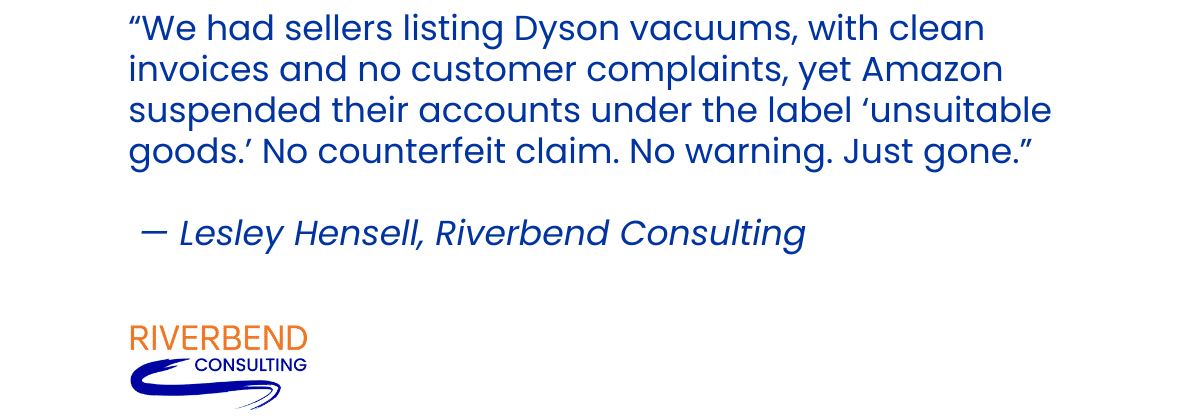
Once Amazon suspects that inventory may be in violation of its restricted products policies, it can trigger Amazon’s Unsuitable Inventory Investigation policy, doing so without much ceremony. Here’s what the policy looks like in action:
- Amazon may deactivate your listings or account while the investigation is underway.
- Your inventory can be withheld, preventing fulfillment or removal until further notice.
- You’ll usually receive an email asking for specific documentation, including:
- Proof of authenticity
- Supplier or distributor information
- Invoices that show a clear chain of custody
- Personal or business identity verification
And here’s the critical part. If you fail to respond by the stated deadline, or if Amazon determines that any of your units fall under the umbrella of “unsuitable”, whether due to fraudulent sourcing, counterfeit concerns, or forged documentation, they can immediately dispose of your inventory without compensation.
Amazon may also choose to validate your documents with third-party organizations or government agencies, adding an additional layer of scrutiny.
Even if you eventually clear your name, the process can take weeks or longer and your inventory may remain inaccessible during that time. This policy is designed to protect Amazon’s customer trust at all costs, even if that means inadvertently impacting legitimate sellers in the process. From their perspective, it’s better to shut things down early than risk buyer backlash or legal fallout later.
That’s why it’s so important to treat every supplier relationship and every shipment as if it could be audited at any time. Because it just might be.
Can private-label sellers be affected by Amazon unsuitable goods suspensions?
It’s tempting to assume that accusations of unsuitable goods will only hit sellers who rely on a wholesale model to source their inventory. And for the most part, that is true.
But in many cases, we’ve seen aggressive Amazon account managers destroy healthy private label brands in the quest to make a quick buck. When cash flow is lagging, these team members may source hands-off wholesale goods or opt for limited drop-shipping. This is a tremendous strategy error. Private label accounts should be limited to private label goods. That way, one bad sourcing error doesn’t tank an entire brand.
Key takeaways from Amazon’s unsuitable goods crackdown
Amazon has become much more resourceful in its quest to uncover counterfeit and suspected counterfeit goods on its marketplace. Matching addresses is just one strategy. Another comes after the Amazon account suspension is made.
For sellers with this type of suspension, Amazon requests chain-of-custody invoices. In almost all unsuitable goods cases we’ve worked on, the supplier could not or would not show the seller their chain of custody. Now, it’s not unusual for a supplier not to share these details. But it’s definitely a pattern that started to look hinky, to say the least. So, what can you do to safeguard your operations?
- Don’t mix a healthy private label account with tempting wholesale flips or drop-shipping. It is not worth the risk to your brand.
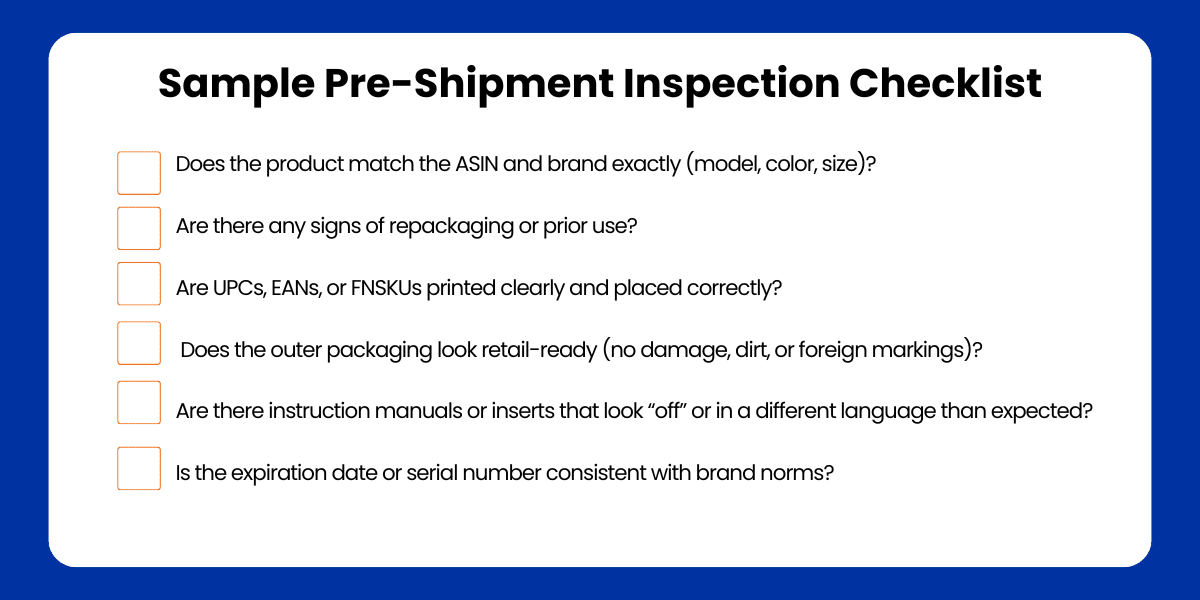
- Inspect your inventory before it goes to FBA.
- Yes, if you develop a long-term relationship with an extremely reputable supplier, you may reach a point where you can trust them to send inventory to FBA for you. However, new ASINs should always be brought to your location for inspection first.
- Ask wholesale suppliers where they source their goods, especially name-brand items they offer in limited quantities. Red flags are small appliances, beauty tools and office supplies. You need to be confident that these were not stolen. Keep in mind that even your supplier may not understand that they received stolen goods. That is what makes this entire business model challenging at the moment.
How to appeal an Amazon unsuitable goods suspension (step-by-step)
If you’ve received a dreaded notification that your inventory or, worse, your entire account has been flagged for unsuitable goods, you’re probably feeling blindsided. And we get it. These account suspensions often come without clear explanations and as you’ve discovered, they hit fast.
But the good news is that you can appeal. It’s not easy or fast. But if you follow the right steps and provide Amazon with what they’re looking for, you can work toward account reinstatement. Here’s how we guide our Riverbend clients through it:
Step 1: Gather all relevant documentation
Amazon won’t even consider reinstatement unless you demonstrate that you’ve got your sourcing and paperwork in order.
You’ll need:
- Invoices from your supplier(s) showing the product, quantity, purchase date and business information
- Supplier contact information, including website and physical address
- Shipping records or packing slips, especially if inventory was sent directly to FBA
- Chain of custody proof, if available (how the product got from the manufacturer to you)
Important: The invoices must match the ASINs and quantities Amazon flagged. If you can’t tie your paperwork directly to the items under investigation, your appeal won’t go far.
Step 2: Write a targeted Amazon POA (Plan of Action)
A generic Amazon POA won’t cut it. You need to specifically address the “unsuitable goods” issue with structure, facts, and solutions. Your POA should include three sections:
- Root cause: Explain how and why the unsuitable goods issue happened (e.g., the supplier was recommended through a coaching program, no inspection was done, etc.) Take responsibility, even if you feel wronged. Amazon wants to see ownership.
- Corrective actions taken: Show what you’ve already done to fix the issue (stopped working with the supplier, pulled similar inventory, reviewed all ASINs in question, etc.)
- Preventative measures moving forward: Detail what you’ll do to ensure this never happens again (vetting process, inspections, supplier audits, etc.)
Don’t include emotion, blame Amazon, or argue that you didn’t do anything wrong. That will kill your case.
Step 3: Submit your appeal through performance notifications
Log in to Seller Central and head to Performance > Account Health > Performance Notifications. Look for the notice related to the unsuitable goods issue and click the option to “Appeal” or “Submit a Plan of Action.” Attach:
- Your Amazon POA (in .doc or PDF format)
- Supporting invoices and documents (up to 10MB per file)
- Any screenshots or supplier communications that help your case
Step 4: Wait, but monitor closely
Amazon’s response time varies. Some sellers receive a response within 24 – 48 hours. Others wait weeks. If Amazon requests additional information, respond promptly and accurately. Don’t resend your original appeal unless you’re explicitly asked to. And don’t flood them with multiple submissions, it resets the queue.
The unsuitable goods policy is intentionally vague. Amazon uses it as a catch-all when they suspect your inventory may be counterfeit, stolen, or otherwise non-compliant, even without buyer complaints.
You’re responsible for what’s in your inventory, whether or not you ever physically touched it. That’s why your appeal has to go beyond “I didn’t know.” It must prove that you’ve taken action and will prevent it from happening again.
How to vet Amazon suppliers to avoid unsuitable goods flags
So, what can you do to safeguard your wholesale operations?
Start by treating supplier selection like an audit waiting to happen, because that’s exactly how Amazon sees it. Most sellers rely too heavily on a supplier’s reputation, a referral from a coaching group, or a too-good-to-be-true price. But in today’s enforcement environment, that’s simply not enough.
If you want to stay off Amazon’s radar for unsuitable goods, your vetting process needs to be airtight. Here’s what we recommend at Riverbend Consulting:
- Obtain a written supplier agreement: A legitimate supplier will have no issue providing documentation that outlines the terms of your business relationship. If they dodge the request or say it’s unnecessary, that’s your cue to walk away.
- Request real invoices, not spreadsheets: The invoice should include complete company details, product descriptions, quantities and dates. You want to see a traceable paper trail, not a formatted Excel file anyone could build in ten minutes.
- Google the warehouse address: Yes, literally. Type the supplier’s FBA shipping address into Google. If you find threads on Seller Central or Reddit mentioning Amazon account suspensions tied to that location, proceed with extreme caution.
- Take a look at their overall catalog: Suppliers who offer only brand-name electronics, beauty tools, or office supplies in small batches should be a red flag.
Real wholesalers carry a wide range of inventory, not just high-risk, high-reward items.
- Check their barcode standards: Are they using GS1 barcodes registered to the actual brand? Do their products comply with GDSN data standards? This is especially critical for sellers who need Amazon Brand Registry or are scaling into new product lines.
- Run a test order, and inspect it yourself: Don’t rely solely on prep centers or automation. Physically inspect the product, the packaging, the labels and the paperwork. If something feels “off,” trust your gut and dig deeper.
If your supplier can’t meet these basic standards, they shouldn’t be anywhere near your Amazon account. Because at the end of the day, it’s your name on the listing and your account on the line.
Protect your Amazon account before you list
Unsuitable goods suspensions are one of the most confusing and frustrating experiences an Amazon seller can face. There’s rarely a warning. There’s often no obvious mistake. And by the time the notification hits your account, the damage is already done.
The good news? These account suspensions are preventable, but only if you treat every sourcing decision like a compliance decision. That means vetting suppliers thoroughly, inspecting inventory when it matters most and steering clear of shortcuts disguised as “automated business models.”
Need help recoverinng from an unsuitable goods suspension? If Amazon flagged your inventory as “unsuitable,” we can help. Our team at Riverbend Consulting has successfully reinstated hundreds of seller accounts by navigating these types of complex investigations. Contact our Amazon problem solving experts today and let’s fight for your account.
FAQs
Q: What triggers an Amazon unsuitable goods suspension?
A: Amazon flags inventory as unsuitable when it suspects items are counterfeit, stolen, or sourced from risky suppliers. Triggers include suspicious shipping addresses, non-verifiable invoices, or repeat ASIN violations.
Q: How can I tell if my supplier is safe?
A: Look for full transparency. A vetted supplier should offer a written agreement, authentic invoices, a broad catalog, and allow you to inspect or test inventory before it ships to FBA.
Q: Does Amazon tell you what goods are unsuitable?
A: No. Amazon typically uses vague language in its notifications. You’ll often receive a general message like “Your account is under review due to the sale of unsuitable goods.”
Q: Can I appeal an unsuitable goods suspension?
A: Yes, but it’s difficult. You’ll need to provide a detailed Amazon POA (Plan of Action) with chain-of-custody documentation, proof of authenticity and a strong compliance case.
Q: Can private label sellers be flagged too?
A: Yes. Even private label brands can face issues if they introduce wholesale items or drop-ship risky goods on the same account.