
Amazon’s Fair Pricing Policy may sound simple, but it’s one of the more opaque and misunderstood aspects of seller compliance. Unfortunately, too many sellers find out about the policy the hard way.
What feels like a competitive pricing strategy to a seller can look like price gouging to Amazon’s algorithms. And when the bots make a move, sellers are often left scrambling for answers.
What is the Amazon Fair Pricing Policy?
Amazon’s Fair Pricing Policy was designed to protect customers from what the platform considers “unreasonable” or “excessive” prices. That may sound like a noble effort and it is, in theory. However, Amazon doesn’t only compare prices within its marketplace. It compares your item’s price to prices on other e-commerce platforms, in brick-and-mortar stores and promotional listings you may have forgotten about.
The problem is that sellers often aren’t told which item triggered the alert or which comparison was flagged. You may find yourself trying to defend a price you thought was perfectly normal because no one ever explained what the guardrails actually are.
Reasons the Amazon Fair Pricing Policy exists
It’s easy to feel like Amazon is out to get sellers with policies like this, but let’s pull back the curtain for a moment. The Fair Pricing Policy was implemented with customer trust at its center. During periods of crisis, think toilet paper in 2020 or baby formula shortages, Amazon received heavy public scrutiny (and even legal pressure) to crack down on price gouging. The result was a blanket policy that applies across the board, regardless of category or intent.
By policing prices, Amazon seeks to ensure buyers continue to see it as a platform with competitive, trustworthy pricing. From their perspective, even one bad actor charging $80 for hand sanitizer damages the entire brand. So instead of dealing with issues reactively, they built an aggressive system to prevent them before they occur.
But here’s the catch. The policy doesn’t always differentiate between opportunistic pricing and legitimate cost changes, especially for resellers or brands with variable sourcing costs. That nuance, or lack thereof, can put even well-meaning sellers at risk.
Breaking down the Amazon fair price gouging policy
For many sellers, the term “fair pricing” sounds vague at best and arbitrary at worst. But when operating on Amazon’s turf, vague policies can lead to real consequences, like suppressed listings or, in some cases, full Amazon account suspensions. That’s why it’s critical to understand what Amazon means when discussing fair pricing and how it interprets seller behavior through that lens.
Amazon doesn’t leave a lot of room for guesswork. Instead, it enforces this policy through automated systems designed to flag anything that looks like a pricing mismatch or manipulation, even if you didn’t intend to cross a line. And while the policy itself might seem like a simple set of guidelines, the way it’s applied can be anything but.
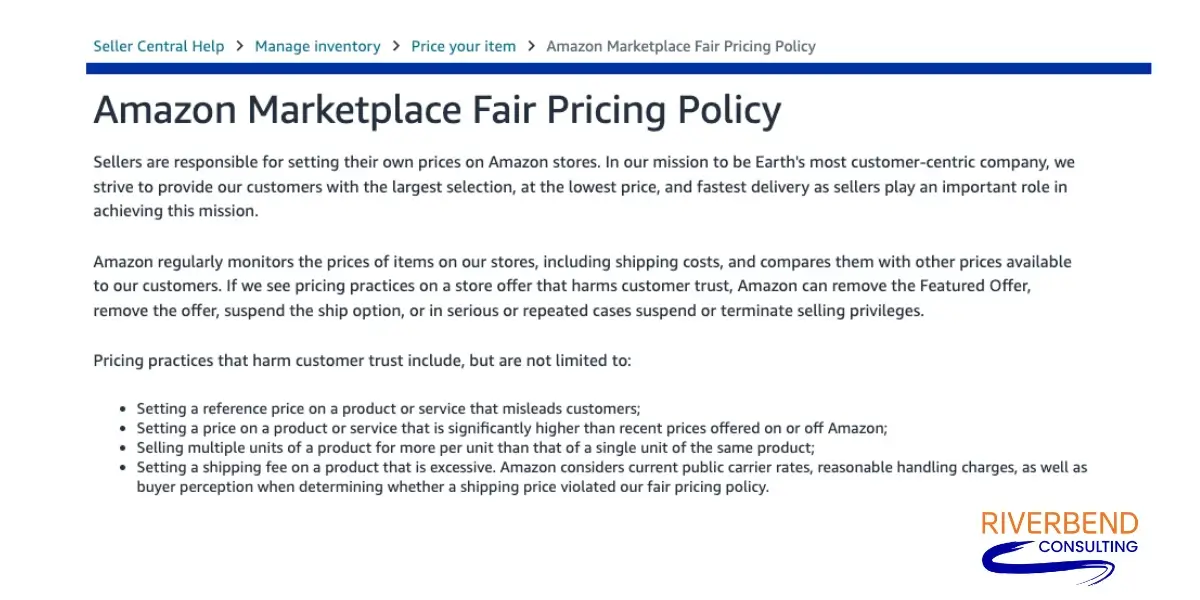
There are four key pricing areas that Amazon watches like a hawk. Understanding these areas is the first step in protecting your account and income. Let’s break them down piece by piece.
- Price gouging: Listing an item significantly higher than market value, especially during demand surges or crises.
- Inflated shipping fees: Inflating shipping costs to sidestep competitive product pricing.
- Abuse of reference prices: Using unrealistic “List Prices” or “Was” prices to create the illusion of a better deal.
- Excessive multi-pack markups: Pricing bundles or multi-packs at rates higher than the combined cost of individual units.
Amazon’s automated systems also flag these additional issues:
- Price parity violations: If your total price (item + shipping) exceeds prices for the same item elsewhere (Amazon or off-platform), that’s a violation.
- Sudden, unexplained price spikes: Even if not during a declared crisis, abrupt price jumps can trigger a policy warning or action.
Amazon uses bots and algorithms to scan millions of listings in real time. If your price, shipping cost, or referenced price stands out as suspicious, your listing may be suppressed, or your entire account could be placed under review. Unfortunately, you won’t always get a warning before action occurs. Here’s what might happen if your prices trigger concern:
- You lose the Buy Box: Even if your product is still active, being stripped of the Featured Offer can instantly tank your conversions.
- Your listing gets suppressed or removed: This means customers won’t see it in search results and they won’t be able to purchase from you directly.
- Your shipping option may be disabled: If you’re fulfilling orders yourself (FBM), Amazon may block your ability to ship that SKU.
- Your entire selling account is suspended or worse, shut down: In more severe or repeated cases, Amazon may decide you’re too much of a risk to the platform.
Amazon fair pricing policy suspension: How to navigate
It’s one of those moments every Amazon seller dreads, waking up to an account suspension notice with vague language about “fair pricing.” Maybe your listings were running fine the night before. Maybe you didn’t change a single price manually. And yet, here you are, locked out of your account with little more than a generic policy violation.
Fair pricing suspensions often blindside sellers because the rules are enforced algorithmically, with no real warning or chance to course-correct. And unlike other suspensions, this one can take time and precision to resolve. But here’s the good news: it’s not the end of your business and you’re not powerless. What you do next can make the difference in getting back up and running. Let’s walk through how to appeal Amazon suspension for fair pricing.
Step 1: Don’t panic, but don’t wait: Take a breath. Then act quickly. Every hour your account is down, you lose money and momentum. Delays can also make reinstatement harder.
Step 2: Find the root cause: Review your recent pricing changes. Did you update shipping? Add a bundle? Increase the price after running out of inventory? Dig into your Business Reports to spot anomalies.
Step 3: Draft your Amazon POA (Plan of Action): Amazon wants three things:
- Root Cause: What happened and why? Take accountability.
- Immediate Corrective Action: What did you do to fix it?
- Preventative Measures: What will you do to avoid it in the future?
Be specific, data-backed and never blame Amazon. Keep your tone professional and cooperative.
Step 4: Submit your appeal through Seller Central: Use the “Account Health” or “Performance Notifications” tab. Double-check your appeal before sending. Even one vague sentence can delay the process.
Step 5: Follow up if needed: If you don’t hear back within 48–72 hours, open a case or call Seller Support. Persistence matters, but so does professionalism.
Tips to avoid price manipulation on Amazon

Fair Pricing violations often feel like they come out of nowhere, but in most cases, early warning signs were hiding in plain sight. Whether it’s a slow drift in your pricing strategy or an overzealous repricer pushing the limits, minor missteps can lead to big trouble if left unchecked.
Amazon acts based on patterns and inconsistencies. Staying compliant means having safeguards that keep you within the policy boundaries, no matter what’s happening in the market. Below are some actionable steps that will help you build those safeguards and maintain a healthy account, day after day.
- Use repricing software wisely: Automated tools are powerful, but can make risky pricing decisions if not correctly configured. Monitor them closely, especially during Q4 or crisis events.
- Benchmark your prices: Periodically check competitors across Amazon and other platforms to ensure you’re not standing out for the wrong reasons.
- Be transparent about bundles: Break down the per-unit pricing when creating multipacks. If the bundle includes added value, ensure that the value is clearly described in your listing.
- Keep records of cost increases: If you raise prices due to supplier changes or freight hikes, document it. That info may be needed in your appeal.
- Audit your listings quarterly: Clean up old promotions, review inactive listings, and ensure you’re not accidentally using outdated reference pricing.
Staying compliant with Amazon’s Fair Pricing Policy helps prove that your pricing is rooted in logic, market behavior and historical consistency. Sellers who keep a pulse on their pricing across platforms have a better shot at avoiding sudden suppressions or suspensions.
Try Amazon’s tools, like the Business Reports and Pricing Health dashboard. These can alert you to offers that may seem too high compared to recent trends or competing sellers. If you use a repricer, double-check that it has built-in safeguards to prevent drastic hikes during low-stock periods or market surges. It only takes one AI-driven spike to get flagged.
Third-party tools like Keepa can help you track your product’s price history. Monitoring these trends makes it easier to defend your pricing strategy if Amazon asks.
Proactive monitoring saves your account health, protects your Buy Box, and keeps your business steady even when the market isn’t.
Staying on Amazon’s good side: your next best move
You’re not a fly-by-night seller if you’ve made it this far. You care about your business, your reputation and playing by the rules even when those rules are murky. Amazon’s Fair Pricing Policy isn’t going anywhere. If anything, it’s becoming more sophisticated, aggressive and central to account health.
That’s not meant to scare you. It’s intended to empower you. The more you understand how Amazon thinks, the better equipped you are to protect your livelihood.
Whether you’re a brand owner, reseller, or hybrid seller, your pricing strategy needs to do more than drive profits; it must reflect compliance, agility and an awareness of Amazon’s ever-watching eye.
Need help keeping your account in good standing? Contact our team today at Riverbend Consulting and take the first step toward protecting your Amazon business with expert support you can count on.
Seller Account Health. Solved.
FAQs
Q: What exactly triggers Amazon’s Fair Pricing Policy suspension?
A: Amazon can flag listings when your item’s price is significantly higher than recent prices on or off Amazon. This includes spikes during emergencies, shipping fee inflation, or pricing way above historical trends.
Q: How can I identify price-gouging violations on my Amazon listings?
A: Review your pricing history, competitor pricing and total cost (including shipping). If your offer seems unusually high compared to what others are charging, you may be at risk, even if your item is out of stock elsewhere.
Q: What is the detailed process for appealing an Amazon pricing suspension?
A: Submit an Amazon POA (Plan of Action) through Account Health or the performance notification. The appeal must include specific ASINs, your pricing rationale and steps to avoid future violations.
Q: How do I create a Plan of Action (POA) that Amazon will accept?
A: There are never any guarantees with Amazon. Break it into three parts: root cause, corrective action and long-term preventative measures. Keep it fact-based and transparent.
Q: What evidence does Amazon require to reinstate a suspended account?
A: You may need to provide invoices, pricing history screenshots, cost breakdowns, or market comparisons. Amazon wants proof that your prices were fair, justified and not meant to exploit demand.
Q: How does Amazon’s pricing algorithm detect unfair price increases?
A: Amazon uses real-time pricing trends, your item’s past price history and comparisons with other marketplaces. Drastic jumps without supply chain justification often trigger automatic suppression or review.
Q: What are the most common mistakes sellers make that lead to price gouging suspensions?
A: Letting prices surge automatically through repricing tools or failing to update shipping fees during disruptions. Another big one: not realizing what’s “fair” on your own website might not fly on Amazon.