
One of the most common pain points Amazon sellers face is the dreaded A-to-z Guarantee claim. While the program was created to protect buyers, too many claims can quickly send your account health into dangerous territory. That’s why it’s critical to understand how these claims work, what triggers them and how to prevent them. Staying one step ahead can make all the difference in keeping your account safe and your business thriving.
What are Amazon A-to-Z Guarantee Claims?
The A-to-z Guarantee was built to give Amazon customers peace of mind when buying from third-party sellers. It’s Amazon’s way of saying, “We’ve got your back,” especially when orders go off the rails.

If a package doesn’t arrive on time, shows up damaged, or isn’t what the customer expected based on the listing, that buyer has the right to file a claim. And when that happens, Amazon steps in. As a seller, this puts you under the microscope. Claims can pile up if you’re not paying attention. The most common reasons sellers find themselves on the wrong side of an A-to-z claim include:
Non-receipt of an item: The product never arrived.
Late delivery: The item was delivered past the estimated delivery date.
Product not as described: The received item differs significantly from its listing.
Damaged or defective items: The product arrived damaged or is malfunctioning.
Refund issues: The customer returned the item but hasn’t received a refund.
Recognizing these triggers can help you proactively address issues, reducing the likelihood of claims.
Filing A-to-z claims
When a buyer encounters an issue and cannot resolve it directly with the seller, they may file an A-to-z claim. Understanding the sequential steps of this process is crucial for sellers to navigate and respond effectively. Here’s what to expect if you receive an A-to-z claim.
Step 1 Claim initiation: The buyer files a claim through their Amazon account, detailing the issue.
Step 2 Seller notification: Amazon notifies you via email and the Seller Central dashboard about the claim.
Step 3 Seller response: You will have a specified timeframe (typically 48 hours) to respond with relevant information, such as tracking details or communication records.
Step 4 Amazon review: Amazon evaluates the information provided by both parties to determine the claim’s validity.
Step 5 Resolution: Amazon decides in favor of either the buyer or you, the seller. If the buyer prevails, a refund is issued and the amount is deducted from your seller account.
A prompt and thorough seller response during this process can influence the outcome favorably.
How should you respond to an Amazon A-to-z claim?
Whether it’s your first or fifth claim, that notification from Amazon can make your stomach drop a little. But here’s the good news. A claim doesn’t automatically mean you’re in trouble. How you respond can make or break the outcome.
Amazon offers a small window of time to present your side of the story and you must use that opportunity wisely. This isn’t the time for guessing or going silent. A well-prepared, professional response can turn the tide in your favor, even if the buyer is upset. Think of it like building your defense. The stronger your case, the better your chance of keeping your record clean and your funds in place.
Here’s how to approach an A-to-z claim calmly, strategically and with all your ducks in a row.
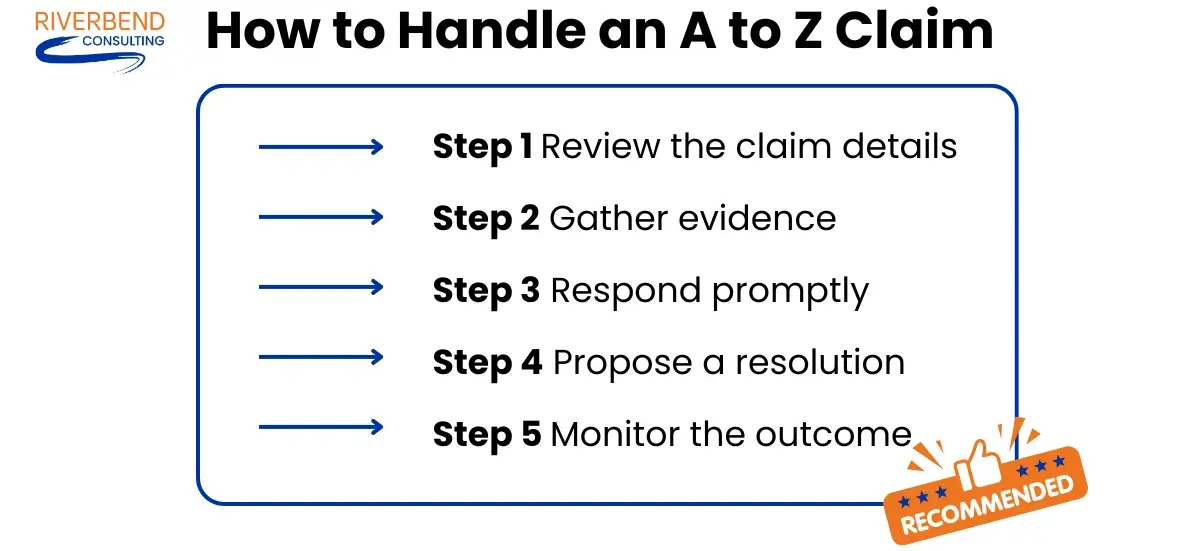
Step 1 Review the claim details: Understand the buyer’s complaint thoroughly.
Step 2 Gather evidence: Collect all pertinent information, including order details, tracking information, product descriptions and any communication with the buyer.
Step 3 Respond promptly: Submit your response within the given timeframe, ensuring clarity and professionalism.
Step 4 Propose a resolution: If the claim has merit, consider offering a refund or replacement proactively.
Step 5 Monitor the outcome: Keep an eye on the claim’s status in Seller Central and be prepared to appeal if you believe the decision was unjust.
Timeliness and professionalism are crucial in these interactions, demonstrating your commitment to resolving issues for Amazon and the buyer.
How to avoid A-to-Z claims
If you’re in the Amazon game for the long haul, preventing A-to-z claims should be high on your priority list. But here’s the thing. Can you prevent an A-to-z claim with certainty? Short answer? No. Unfortunately, you can’t stop an A-to-z claim with 100% certainty.
Even the best sellers, with spotless metrics and years of experience, can still get hit with a claim out of left field. Maybe a package got delayed by the carrier. Maybe a buyer didn’t recognize the charge and thinks it’s fraud. Maybe they’re just having a bad day. Some things are out of your control.
But here’s what you can control. How often those claims show up. You can reduce your risk by focusing on what Amazon cares about: accuracy, speed, communication and follow-through. When you consistently meet (or exceed) customer expectations, you give buyers fewer reasons to open a claim in the first place.
Most buyers don’t set out to file Amazon A to Z guarantee claims; they do it when they feel ignored, disappointed, or flat-out misled. That means the real power lies in your hands. Let’s walk through some of the most effective ways to head off claims before they ever reach Amazon’s inbox.

- Accurate product listings: Ensure your listings, including titles, bullet points, product descriptions and images, are precise and truthful.
- Reliable shipping: Use dependable carriers and provide valid tracking information for all orders.
- Effective communication: Respond promptly to buyer inquiries and resolve issues amicably before they escalate.
- Quality control: Regularly inspect your products to ensure they meet the described standards.
- Clear return policies: Make your return and refund policies transparent and easy for buyers to understand.
- Monitor performance metrics: Regularly check your seller dashboard for any red flags or areas needing improvement.
- Stay updated: Keep abreast of Amazon’s policies and adjust your practices accordingly.
What happens if you have too many Amazon A-to-z Guarantee Claims?
Let’s not sugarcoat it, multiple A-to-z claims are a big red flag in Amazon’s eyes. And when too many of them stack up, it’s not just a slap on the wrist. We’re talking real consequences that can damage your account health, stop your payouts, or worse, lead to an Amazon account suspension.
Amazon takes buyer satisfaction seriously and every A-to-z claim counts against your Order Defect Rate (ODR). That number isn’t just a quiet metric buried in Seller Central; it’s one of the first things Amazon looks at when deciding whether you meet the platform’s standards. If your ODR creeps past 1%, you’re officially on thin ice. Keep going past that threshold and you’re headed straight for trouble.
Amazon rarely gives much wiggle room regarding account performance. If multiple claims pop up, it’s time to act fast. You need to dig into the root causes, tighten up your operations and get ahead of the problem before it turns into a full-blown suspension.
Here’s what’s at stake when too many A-to-z claims appear on your account.
- Account health impact: Many claims can negatively affect your Order Defect Rate (ODR), a critical metric Amazon uses to assess seller performance.
- Amazon Account suspension risk: Consistently poor performance metrics, including frequent claims, can lead to account suspension or even termination.
- Financial loss: Beyond refunds, handling claims consumes time and resources, diverting focus from business growth.
Maintaining a low claim rate is essential for sustaining a healthy seller account and ensuring continued success on the platform.
When to refund before it becomes an A-to-z Claim
No one likes to give money back, especially when you know you shipped the correct item, on time and exactly as described. But here’s the reality of selling on Amazon: sometimes, the smartest business move is to take the short-term hit and issue a refund before it escalates into something much bigger, like an A-to-z Guarantee claim.
This isn’t about giving in. It’s about protecting your most valuable asset. Your Amazon seller account. So when choosing between issuing a $20 refund or risking your entire selling privileges, the decision gets a lot easier.
When should you refund proactively?
Here’s when it makes sense to resolve the issue before Amazon gets involved:
- The buyer is clearly unhappy and not responding well to your resolution efforts. Even if you’re technically in the right, some customers are determined to escalate. It might be time to pull the plug and refund if that happens.
- Tracking is incomplete, delayed, or missing. Even if you shipped on time, if the buyer can’t see movement on their order, their frustration can boil over. Without solid tracking, Amazon often sides with the buyer anyway.
- There’s a gray area in your listing. Maybe a photo was unclear. Maybe a size chart was off. If there’s any room for interpretation, the buyer will usually win the claim, so it’s better to get ahead of it.
- It’s a low-cost item. If the value of the product is less than what it would cost in terms of time, fees, or risk to fight the claim, save yourself the headache. Refund and move on.
- The return looks questionable, but it’s not worth the appeal. Yes, it’s frustrating when buyers send back used or incomplete items. But if the item was inexpensive and the hassle of documentation isn’t worth it, letting it go may protect your metrics in the long run.
Good customer service doesn’t mean you must roll over whenever a customer complains. You worked hard for those sales and your margins matter. But you have to weigh what’s more costly: a single refund, or a damaging claim that sticks to your account like glue.
Choose your battles. Protecting your account health on Amazon is always worth more than winning a small argument over a return.
How to appeal an unfair A-to-z claim decision
Here’s something no one likes to talk about, but it happens more often than you’d think. Amazon sides with the buyer, even when you did everything right. You shipped on time. The tracking shows it was delivered. The product matched the listing to a tee. And yet, you’re left footing the bill for a refund that doesn’t feel fair.
The A-to-z claim system isn’t perfect and sometimes the decision goes sideways. But you have the right to appeal if the claim was made in error. And when done correctly, an Amazon appeal can work in your favor.
When should you appeal?
Appeals are worth pursuing when:
- You have solid tracking that proves delivery on or before the promised date.
- The buyer’s reason contradicts your product listing or communication history.
- You offered a resolution (like a refund or replacement) that the buyer ignored or declined.
- The item was returned in used, damaged, or materially different condition.
If you’ve got receipts, literal and metaphorical, it’s worth the fight.
How to build a strong appeal
This is where a little organization goes a long way. Amazon isn’t going to wade through a mountain of explanation. They want clear, concise, factual information. Here’s what to include in your Amazon appeal.
- Order details: Include the order ID and a summary of what was purchased.
- Tracking info: Provide tracking numbers, delivery confirmation and any carrier updates.
- Screenshots: Show your product listing, especially if the buyer claimed the item was “not as described.”
- Buyer communication: Attach any messages showing your attempts to resolve the issue, refund offers, or responses.
- Photos: If applicable, share images of the returned item, especially if it arrived damaged or is not your product.
And don’t forget your tone. Keep it respectful, professional and focused on the facts. This isn’t the place to vent (tempting as it may be).
Where to submit your appeal
File your appeal through Seller Central under the Performance Notifications section. Find the A-to-z claim, click into the case and select “Appeal Decision” or “Submit Additional Information,” depending on what’s available.
You usually have up to 30 days from the decision to appeal, so don’t sit on it too long.
Protecting your peace and your Amazon business
A frustrated buyer and a seller caught in the crossfire are at the heart of every A-to-z Guarantee claim. And while some situations are beyond your control, most claims are preventable when you approach your business with clarity, precision and a customer-first mindset.
Knowing how to navigate Amazon A-to-z Guarantee claims and, more importantly, how to avoid them separates struggling sellers from long-term success stories. From understanding the appeal process to knowing when it’s wiser to refund than to fight, your decision either strengthens or weakens your standing on Amazon.
It’s not about being perfect. It’s about being proactive and watching your account health like a hawk, fine-tuning your processes and taking the small daily steps that add up to big protection down the line. Stay sharp, stay accountable and never wait for Amazon to tell you something’s wrong. That’s how you keep those claims off your radar and your business in the clear.
If an A-to-z claim has damaged your account health or led to an account suspension, don’t try to navigate it alone. Reach out to Riverbend Consulting. Our team knows how to build strong appeals that get real results.
Seller Account Health. Solved.
