Your Amazon account health rating is the foundation of your Amazon business. Maintaining a solid rating ensures that your Amazon business remains operational, protects you from potential account suspensions, and builds trust with Amazon and your customers. Despite its vital importance, understanding Amazon’s Account Health Rating (AHR) can feel like unlocking a secret code.
Account health rating policies are designed to protect the marketplace’s integrity, yet they can be complex and elusive. You know you need to follow the rules, but the specifics and how they affect your rating feel shrouded in mystery. We’re pulling back the curtain on account health rating policies, helping you understand the key factors that impact your rating and what steps to take to safeguard your account.
What is the Amazon Account Health Rating (AHR)?
Amazon’s Account Health Rating (AHR) is a performance indicator that reflects how well you comply with Amazon policies. It is a snapshot of your overall account standing, offering a quick view of potential risks that could jeopardize your ability to sell on the platform. AHR is more than just a performance metric—it’s Amazon’s way of ensuring that you meet its strict standards to maintain a high-quality marketplace.
The account health rating helps Amazon determine if your account is at risk of suspension or deactivation due to policy violations. If your rating is consistently good, you can operate with peace of mind. If your rating drops below a certain threshold, you could be on the path to severe consequences, including listing removals, Amazon account suspension, or permanent deactivation.
How the account health rating works
Amazon’s AHR is based on three key pillars:
#1 Customer service performance: This includes your order defect rate (ODR), which measures negative customer feedback, chargebacks, and A-to-Z guarantees. A low ODR is crucial for maintaining a good account health rating.
#2 Policy compliance: You must follow Amazon’s rules and guidelines. Violations like counterfeit products, misrepresentation, or selling restricted items negatively impact your rating.
#3 Shipping performance: Amazon values timely deliveries. Factors like late shipment and valid tracking rates can affect your account health. Consistently missing shipping targets can result in penalties that drag down your rating.
Policies that impact your account health rating
Here’s a detailed breakdown of Amazon policies that affect your AHR: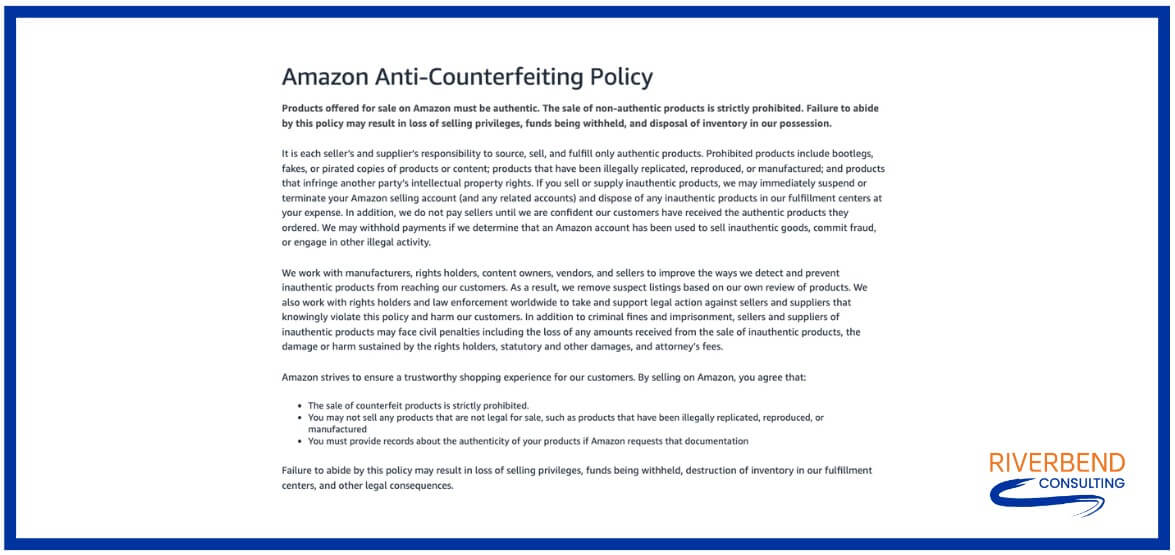
Fig. 1.0 Amazon Anti-Counterfeiting Policy, amazon.com
- Anti-counterfeiting policy: Amazon strictly prohibits the sale of counterfeit goods. Ensure all your products are authentic; violating this policy can lead to account suspension or legal action.
- Brand name policy: Use correct and authorized brand names in your listings. Misrepresenting a brand or using trademarks without permission is not allowed.
- Intellectual property policy: Amazon protects intellectual property (IP) rights, including copyrights, trademarks, and patents. Ensure you don’t infringe on IP rights, or owners can report violations.
- Marketplace fair pricing policy: This policy prevents price gouging and ensures fair market competition. You cannot set unreasonably high prices or manipulate prices to deceive customers.
- ASIN creation policy: You must create accurate and unique ASINs (Amazon Standard Identification Numbers) for your products. Duplicate listings or misuse of existing ASINs is prohibited.
- Communication guidelines: Amazon regulates how you communicate with buyers. Messages should be professional, customer-focused and not contain inappropriate content or request positive reviews.
- Customer product reviews policy: Manipulating reviews is strictly forbidden. You cannot offer incentives for positive reviews or manipulate reviews to inflate product ratings.
- INFORM Consumers Act: This law requires Amazon to collect, verify, and disclose information about high-volume third-party sellers to help ensure consumer protection against fraudulent sellers.
- Product condition guidelines: Amazon requires that all products accurately describe their condition. This applies to new, used, refurbished, and other product types, ensuring transparency and quality expectations.
- Product detail page rules: You must create accurate and complete product descriptions, images, and specifications. Misleading or incomplete product detail pages can result in penalties.
- Adult products guidelines: Specific rules govern the sale of adult products, including restrictions on explicit content and ensuring appropriate categorization and labeling.
- Software selling guidelines: Software must comply with Amazon’s policies on authenticity, licensing, and description accuracy, particularly regarding digital rights and version numbers.
- Product safety and compliance: You are responsible for ensuring that your products meet all relevant safety standards and regulatory requirements. This includes providing proper documentation and safety testing certifications when required.
- Restricted products policy: Amazon bans or restricts the sale of certain products, including hazardous materials, drugs, and illegal or unethical items. Ensure you comply with these restrictions.
- Selling policies and Seller Code of Conduct: Amazon expects sellers to act ethically, provide high-quality customer service, and maintain professional behavior. Violations can lead to suspension or permanent account closure.
These policies aim to create a fair, safe, and transparent marketplace for sellers and customers.
Where to find your account health rating

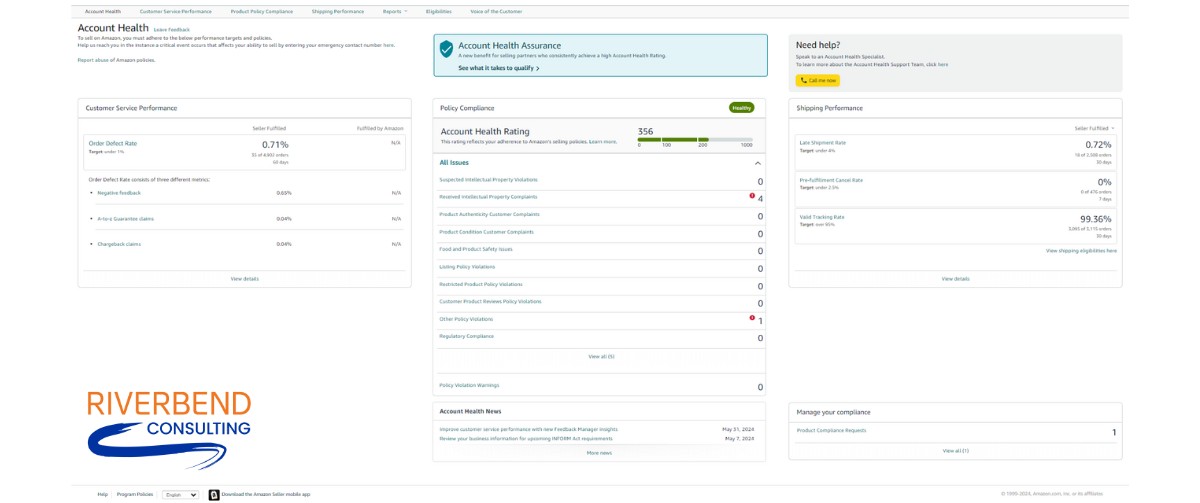
Finding and monitoring your Account Health Rating is essential for maintaining your business on Amazon. You can track your account health from your Seller Central dashboard.
Steps to access your Account Health Rating:
- Log in to Seller Central: Log in to your Amazon Seller Central account. This is where you’ll manage all aspects of your seller activity, from inventory to performance metrics.
- Navigate to the Performance Tab: Once logged in, locate the Performance tab at the top of the dashboard. Hover over it, and a drop-down menu with various performance-related options will appear.
- Click on Account Health: In the drop-down menu under Performance, you’ll find the Account Health option. Click on it to access your current Account Health Rating.
- Review critical metrics: The Account Health page provides a detailed view of your performance metrics. These include customer service, policy compliance, and shipping performance—three crucial pillars of your Account Health Rating. You’ll also see if there are any policy violations or warnings that need immediate attention.
- Monitor alerts and notifications: On this same page, Amazon displays active warnings, violations and account deactivations that impact your rating.
Your account health can change quickly based on performance or violations. Regularly check your Account Health Rating to stay ahead of any problems and fix issues before they escalate. Amazon provides real-time updates, so staying vigilant about this section ensures you remain compliant and avoid disruptions to your selling activities.
How to improve your account health rating


If you notice that your Account Health Rating is slipping, immediately preventing deterioration is critical.
Address policy violations immediately
Amazon provides warnings for a reason. Failing to act on warnings about policy violations, product issues, or shipping delays can quickly lead to penalties or suspension. Always take notifications seriously and address any flagged issues promptly.
Review the specific violation, understand the nature of the problem, and take corrective action as quickly as possible. Submitting a Plan of Action (POA) with detailed steps you’ll take to prevent future violations can help restore your account health.
Update product listings
Misleading or incorrect product descriptions, images, or categories can lead to customer complaints and policy violations. Always ensure your listings are accurate and up-to-date to avoid penalties for misrepresentation.
Improve customer service performance
Monitor your order defect rate (ODR) and work on reducing negative customer feedback, chargebacks, and A-to-Z Guarantee claims. This may involve improving product descriptions, addressing common customer concerns, or ensuring quicker query response times. A low ODR helps maintain a high account health score.
Enhance shipping performance
Don’t underestimate the impact of shipping performance on your account health. Late shipments and invalid tracking can quickly deteriorate your rating. If you need help with late shipments or tracking information, consider using Fulfillment by Amazon (FBA) to handle logistics. If you fulfill orders, streamline your process to ensure on-time deliveries and valid tracking rates.
Monitor product quality
Poor product quality or misrepresentation can lead to high return rates and negative feedback. To minimize complaints, ensure your products match descriptions and images and improve quality control.
Avoid selling restricted products
Listing prohibited or restricted items can lead to immediate violations. Always review Amazon’s restricted product policies and ensure that any new products you list comply with these guidelines.
Account health rating policies: What happens if you violate them?
Understanding how Amazon responds to account health violations can help you maintain your account.
Warnings
Amazon may issue a warning for minor policy infractions or performance issues. These warnings are your chance to correct the issue before it escalates to more severe consequences.
Temporary suspensions
If Amazon identifies more severe violations, such as recurring policy breaches, intellectual property complaints, or poor customer service, it may suspend your account. During this time, your listings will be removed. You won’t be able to sell until the issue is resolved and you provide a Plan of Action (POA) that satisfies Amazon’s requirements.
Permanent deactivation
In cases of severe or repeated violations, Amazon may permanently deactivate your account. This occurs when you fail to correct issues or engage in fraudulent or unethical practices. Permanent deactivation means losing access to your entire Amazon account, making it crucial to avoid letting violations spiral out of control.
Appeals process
You can try an Amazon appeal if your account is suspended or deactivated. Submit an Amazon POA explaining how you will correct the issue and prevent future occurrences. If accepted, Amazon may reinstate your account, but nothing is guaranteed.
Proactive strategies to maintain a healthy account rating
Take a proactive approach to avoid account health issues altogether.
Regularly review Amazon account health policies
Amazon frequently updates its policies, so staying informed is crucial. Review Amazon’s guidelines regularly to ensure your selling practices are aligned with the platform’s rules, especially regarding product safety, intellectual property, and customer service.
Conduct self-audits
Periodically audit your listings, shipping performance, and customer feedback to identify potential issues before they escalate. Staying ahead of problems helps prevent policy violations and ensures account health.
Unlock expert support
Contact Riverbend Consulting account reinstatement experts for clarification on a policy or if you are concerned about your account health. Clarifying with experts can prevent unintentional violations and ensure you comply with the platform’s expectations.
Set up alerts
Enable alerts for important notifications like order defect rate, late shipment rate, and customer complaints. Real-time insights into your account’s performance allow you to address issues before they affect your rating.
How to navigate uncertainty around account health rating policies
One of the most challenging aspects of managing your Account Health Rating (AHR) is the need for transparency about how the score is calculated. It can feel like navigating a minefield—any new defect or policy violation can jeopardize your entire business. The uncertainty surrounding the AHR score means you can’t afford to sit back and let minor issues slide. No matter how small, every infraction can push your account into “At Risk” or even “Unhealthy” status, jeopardizing your selling privileges.
The importance of addressing every violation
A policy violation or ASIN suspension can weigh heavily on your AHR score for months, meaning you must take swift action to resolve issues. One of the most effective ways to handle these issues is by submitting an appeal. You can appeal policy violations and suspended ASINs by providing Amazon with corrective actions and, when necessary, valid documentation to support your claims.
But there’s a caveat: You can’t appeal without valid invoices for the products in question. Without proper invoices, your options for resolving issues become severely limited. Invoices serve as proof of product authenticity and compliance, and without them, Amazon may deny your appeal, leaving the defect to impact your account negatively.
To avoid falling into “At Risk” territory, ensure you have detailed and valid invoices for every item on Amazon. Documents should demonstrate your product’s authenticity, supplier information, and purchase history. Valid documentation can mean the difference between a successful appeal and a permanent ban.
Safeguarding your success
Account health rating policies are the backbone of your Amazon business. While the intricacies of maintaining a healthy AHR can feel overwhelming and unclear, taking proactive steps—like closely monitoring your account metrics, addressing policy violations promptly, and keeping thorough documentation—can safeguard your account from suspension and deactivation.
Ready to protect your business and ensure long-term success? Start taking control of your Account Health Rating today to keep your Amazon store running smoothly and securely. Contact us for account help now.
Seller Account Health. Solved.