
No one starts an Amazon business expecting fraud to be a natural part of their business plan. But for many Amazon sellers, it’s become an unavoidable reality.
Behind every smooth transaction, there’s risk: fraudulent chargebacks, buyer scams and a maze of penalties that quietly eat into your margins. The emotional and financial weight of these issues is often brushed off until it’s too late. Sellers may think, “It’s just a cost of doing business.” But when you break down the numbers and the ripple effect, it’s clear: chargebacks and fraud don’t compound. If you’re not watching closely, they can pull your business under.
Understanding first-party vs. third-party fraud

Many sellers focus only on stolen credit card fraud, but that’s the tip of the iceberg. There are two key types of fraud in e-commerce: first-party (friendly fraud) and third-party (true fraud).
First-party fraud is when a real customer receives a product, then falsely claims they didn’t, or disputes the charge to get it for free. It’s harder to detect and far more common than you’d think.
Third-party fraud, on the other hand, usually involves stolen identities and fake accounts. You need to protect against both. That means tracking patterns, tightening return policies and knowing when a buyer is gaming the system.
What is an Amazon seller chargeback on Amazon?
To the average buyer, filing a chargeback is a simple way to resolve a payment issue. But behind the scenes, it triggers a chain reaction for sellers. When a buyer disputes a charge, the funds are immediately pulled from the seller’s account. Amazon then conducts a review and depending on the outcome, the seller may or may not be reimbursed.
Sometimes, the chargeback stems from fraud, like a stolen credit card, leaving the seller to eat the cost. In other cases, it’s buyer’s remorse disguised as a dispute. Either way, sellers risk losing both the product and the money. While Amazon does fight the chargeback on the seller’s behalf, the final decision rests with the buyer’s card issuer, not Amazon. Even if Amazon presents a strong case, if the bank sides with the buyer, there’s little Amazon can do. And even when sellers win, hidden fees often
When to fight a chargeback on Amazon and when to let it go
Not every chargeback is worth the energy. Some sellers waste hours disputing small-ticket claims when the payout, if they win, is negligible.
A smarter approach? Know your threshold. Have a policy in place: if the product is under $20 and the documentation is weak, consider it a write-off and move on. For higher-value orders, fight, but only if you have solid proof (tracking, delivery confirmation, buyer messages). Every dispute costs time, and sometimes peace of mind is worth more than being right. The goal is to protect your margin and metrics, not win every battle.
Does Amazon ban sellers for chargebacks?
While a single chargeback won’t usually trigger a ban, repeated disputes can flag your account. Amazon monitors chargeback ratios closely, especially if they climb above industry norms. If Amazon believes you’re at high risk for fraud or poor customer service, you may experience Amazon account suspension or even be permanently removed.
One or two chargebacks may seem harmless. However, in Amazon’s eyes, they can point to bigger problems: fulfillment issues, policy violations, or a bad buyer experience. Once your account is under review, everything, from your listings to your payout schedule, can be frozen quickly.
Do Amazon seller chargebacks hurt the seller?
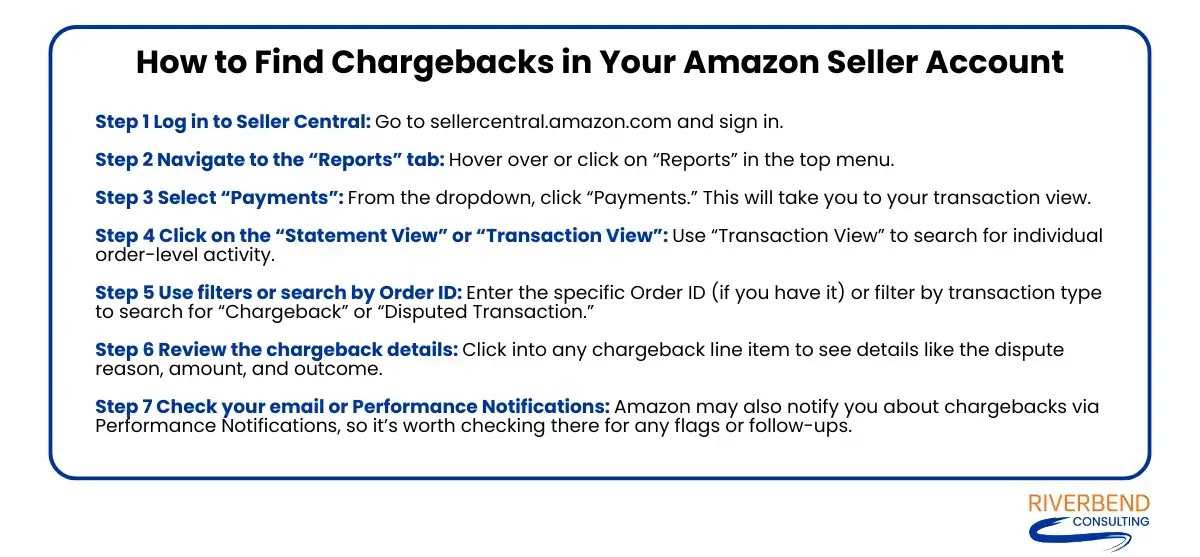
Absolutely. Even if you win the dispute, you often lose valuable time, inventory and peace of mind. Every chargeback ties up funds and forces you to pull records, submit documents and jump through hoops to prove their case. And when you lose, it’s worse. Amazon doesn’t reimburse shipping fees; the product is gone and you eat the entire cost.
Chargebacks are one of the most damaging blows to your standing with Amazon. They hit your Order Defect Rate (ODR) harder than almost anything else. Chargebacks are considered the worst possible outcome for an order, more severe than a negative feedback or even an A-to-Z claim. Too many can drag down your performance metrics, shrink margins and trigger red flags that sellers simply can’t afford
What are the hidden chargeback fees for Amazon sellers?
Chargebacks often include processing fees that you may never see coming. Amazon deducts a non-refundable dispute fee for each chargeback filed, even if you win the case. Fees vary depending on your payment processor and are almost never advertised upfront.
On top of that, you may be hit with:
- Bank fees
- Restocking losses
- Third-party tool expenses
Most sellers don’t realize they’re bleeding money until they dig into their statements. That’s the danger of hidden fees, they’re invisible until they add up.
Operational costs of fraud and its impact on Amazon
Fraud can hit your entire workflow. Frequent fraud issues can mean you spend more time managing returns, updating systems, responding to chargebacks and dealing with customer service chaos. Fraud slows your business down. You can’t automate fraud and most tools only help after the fact. Fraud pushes sellers to invest in more packaging, signature-required shipping and verification software, all of which eat into your margins.
As abuse of return policies increases on the platform, Amazon becomes stricter, meaning your account is under more scrutiny, and your risk of account suspension rises. Operationally, it’s like paying an invisible tax to stay afloat.
Seller account suspension risks: How chargebacks can lead to Amazon account suspension
This is the part no one wants to talk about, until it’s too late. Chargebacks can directly impact your Amazon account health. Amazon uses metrics like your Order Defect Rate (ODR) to monitor seller performance and chargebacks count heavily toward that score.
You’re officially in dangerous territory if your ODR creeps above 1%. It might start with warnings or temporary holds, but you could face full account suspension if the trend continues. Even if a chargeback isn’t your fault, say, it’s a stolen card or a buyer scam, it still reflects on your performance. Amazon’s system doesn’t always distinguish intent; it watches patterns. And if your pattern looks risky, they can shut things down fast.
Amazon account reinstatement can be time-consuming, emotionally draining and far from guaranteed. Even if you eventually win your Amazon appeal, the revenue loss during downtime and the damage to your brand’s momentum can take weeks or months to recover. That’s why preventing chargebacks before they snowball is more than a best practice; it’s survival.
E-commerce fraud prevention: Helpful tips
The key to reducing chargebacks is simple, but not easy: proactive customer service and bulletproof documentation.
Tip 1 Review your order and shipping processes: Are you confirming delivery? Are you providing tracking and receipts? Every step you can verify is a layer of protection/
Tip 2 Make your return policies clear: Communicate quickly with unhappy buyers and document everything, including conversations, tracking numbers, refunds and resolutions.
Tip 3 Use Amazon’s buyer messaging system to keep a paper trail: Tools like automated dispute management software can help, but they’re not a replacement for strong processes.
Amazon seller chargeback prevention is money in your pocket and one less strike against your account.
Operational costs of fraud on Amazon: Why chargebacks cost more than refunds
It might feel easier to let chargebacks happen, but they’re almost always more expensive than offering a refund upfront. With a refund, you control the process. You can request a return, restock the item and maintain goodwill with the customer.
But with chargebacks on Amazon, you lose control. Revenue loss from fraud adds up. Your funds are pulled instantly, the customer keeps the item and you’re left with processing fees and a hit to your metrics. Not to mention, the time you spend disputing the chargeback could’ve been spent selling.
Best fraud prevention tools for Amazon sellers
There’s no magic bullet for e-commerce fraud, but there are tools that help. For Amazon specifically, your best tool is Seller Central vigilance. Monitor your return reasons, respond to A-to-Z claims immediately and track patterns across buyers.
CRM tools can centralize your communication and help you flag repeat offenders. And don’t underestimate good old spreadsheets. Tracking disputes, returns and chargebacks manually gives you a better sense of your blind spots. Combine tech with process and you’ve got your best line of defense.
How to train your team to spot fraud faster

Whether you’re managing a small support staff or using virtual assistants, they need to know what fraud looks like. Train them to watch for suspicious patterns, repeat refund requests, mismatched shipping addresses and vague complaints right before the return window closes.
Create SOPs for escalating red flags, verifying buyer claims and responding within Amazon’s timelines. Empowering your team with fraud knowledge reduces risks and speeds up response time.
Where to go from here
Fraud and chargebacks are part of selling online, but they shouldn’t be the part that ruins your business. The hidden costs creep in when you’re not looking: lost inventory, broken trust, wasted hours and fees that bleed you dry.
Tighten your systems, strengthen your communication and learn to spot patterns before they become problems. You’ve worked too hard to let fraud cut into your margins or your momentum. Stay alert. Stay organized. And remember: prevention is always cheaper than recovery.
If you’re overwhelmed by disputes, drained by hidden fees, or unsure how to protect your brand, you don’t have to figure it out alone. Let Riverbend Consulting take the pressure off. We’ll review your account, help you strengthen your systems and step in fast if things go sideways.
Seller Account Health. Solved.
Frequently Asked Questions
Q: What are the hidden chargeback fees for Amazon sellers?
A: Beyond the lost product and revenue, sellers may pay non-refundable dispute fees, bank fees and operational costs like restocking or added customer service time.
Q: How does e-commerce fraud increase Amazon’s operational costs?
A: Fraud creates more work, manual order checks, customer claims, returns and disputes. It slows operations and forces sellers to invest in extra tools, shipping verification and stricter policies.
Q: What are some indirect financial losses from Amazon chargebacks?
A: You can lose more than money. Chargebacks can hurt your account health, drain team resources and damage customer trust. The ripple effect can drag down overall performance.
Q: How can sellers prevent excessive Amazon chargeback penalties?
A: Tighten your order processes, track shipments and document customer communication. Quick refunds and clear policies can help stop disputes before they happen.
Q: Why do chargebacks cost more than refunds on Amazon?
A: With a refund, you control the process. A chargeback means the buyer keeps the product, you pay fees and your metrics take a hit.
Q: What are the best fraud prevention tools for Amazon sellers?
A: For Amazon, nothing beats vigilance. But tools like Signifyd, NoFraud, and CRM systems like Gorgias can help flag bad actors and streamline your response.
Q: How do chargebacks affect Amazon seller accounts?
A: Too many chargebacks impact your Order Defect Rate. A low ODR can trigger account warnings or suspensions.