
As an Amazon seller, you know that success on the platform requires grit, strategy and constant adaptation. While Amazon offers a massive customer base, it also comes with limitations like fierce competition, high fees and strict policies that can shift at a moment’s notice. This is why diversifying your e-commerce presence is essential for building a resilient business.
Expanding beyond Amazon can open new doors, help you tap into different customer segments, reduce your dependency on one platform, and ultimately grow your revenue. Whether you’re looking to launch your own Shopify store, explore Walmart’s online marketplace, or branch out to other platforms, having a solid business expansion strategy is key. Let’s break down how business expansion strategies can help you make that leap and thrive across multiple sales channels.
What is a business expansion strategy?

A business expansion strategy is a well-thought-out plan to grow your operations into new markets, platforms, or territories. For Amazon sellers, this means leveraging your existing success and scaling it by diversifying where and how you sell.
Why does this matter? For starters, expanding your business reduces risk. If your account faces an unexpected Amazon seller account suspension, your business won’t come to a grinding halt.
Different platforms often attract different types of customers. Expanding allows you to reach audiences who may not typically shop on Amazon but are loyal to other platforms.
Here are some key benefits of business expansion strategies:
- Increased brand visibility: Building a presence on multiple platforms makes your brand more recognizable.
- Reduced risk: Relying solely on Amazon can feel like walking a tightrope. Expansion provides a safety net.
- Enhanced customer experience: Some platforms, like Shopify, allow you to craft a more personalized shopping experience.
- Higher revenue potential: The more places you sell, the greater the opportunity to reach new customers and increase sales.
The key to a successful expansion is planning. Simply listing your products on multiple platforms isn’t enough. You need to understand each platform’s unique requirements, audience and advantages.
Marketplace diversification for online sellers
Shopify
Shopify allows you to build your own branded online store, giving you full control over the customer experience, from the layout of the website to how products are displayed and marketed. Here’s how you can transition from being an Amazon seller to running your own Shopify store:
Set up your Shopify store: Creating a Shopify store is straightforward. Choose a theme that aligns with your brand, upload high-quality product images, and write compelling product descriptions. Remember, this is your store, so it’s worth investing time in making it look polished and professional.
Leverage Shopify’s integration with Amazon: One of Shopify’s standout features is its seamless integration with Amazon. This allows you to:
- Sync your Amazon listings with your Shopify store.
- Manage inventory across both platforms from a single dashboard
- Offer the same products on Shopify that you sell on Amazon without starting from scratch.
This integration reduces the manual work needed to expand and ensures that your operations remain streamlined.
Focus on marketing: Unlike Amazon, Shopify doesn’t bring customers to you. You’ll need to drive traffic through strategies like:
- Social media marketing: Use platforms like Instagram and Facebook to showcase your products.
- Email marketing: Build a subscriber list to stay in touch with customers.
- SEO: Optimize your website to rank higher with SEO.
Enhance the customer experience: With Shopify, you can offer features like personalized recommendations, loyalty programs and blog content to engage your audience. These small touches can significantly boost customer retention and brand loyalty.
Walmart.com
Walmart.com is another excellent platform for diversifying. With its rapidly growing online marketplace and reputation as a trusted retailer, the Walmart marketplace is an appealing option.
Here’s how to expand your business to Walmart.com:
Meet Walmart’s requirements: Unlike Shopify, Walmart has strict requirements. To qualify and avoid Walmart account suspension before getting started, you must:
- Have a U.S.-based business.
- Sell high-quality products.
- Offer competitive pricing.
- Have reliable fulfillment and customer service.
Take the time to ensure your business meets these standards before applying.
Apply to become a seller: The application process involves filling out detailed information about your business, including your Tax ID, DUNS number and product categories. Once approved, you’ll gain access to Walmart’s Seller Center, where you can manage your listings and track performance.
Optimize your listings: Like Amazon, Walmart’s marketplace rewards optimized listings. But that doesn’t mean you should use the same content on Walmart.com as on Amazon. Focus on:
- Clear, keyword-rich product titles.
- Craft accurate and relevant product descriptions that highlight features and benefits.
- Uploading high-quality images.
- Following Walmart.com listing requirements, including image sizing, terminology and format
Leverage Walmart Fulfillment Services (WFS): Walmart’s answer to Amazon FBA is Walmart Fulfillment Services (WFS). By using WFS, you can:
- Store inventory in Walmart’s fulfillment centers.
- Offer fast and reliable shipping to customers.
- Gain the “2-Day Delivery” tag on your listings, increasing visibility and sales.
Try Walmart advertising tools: Walmart Connect provides advertising options to help your products stand out. These tools, which range from sponsored products to display ads, can boost your visibility and drive sales.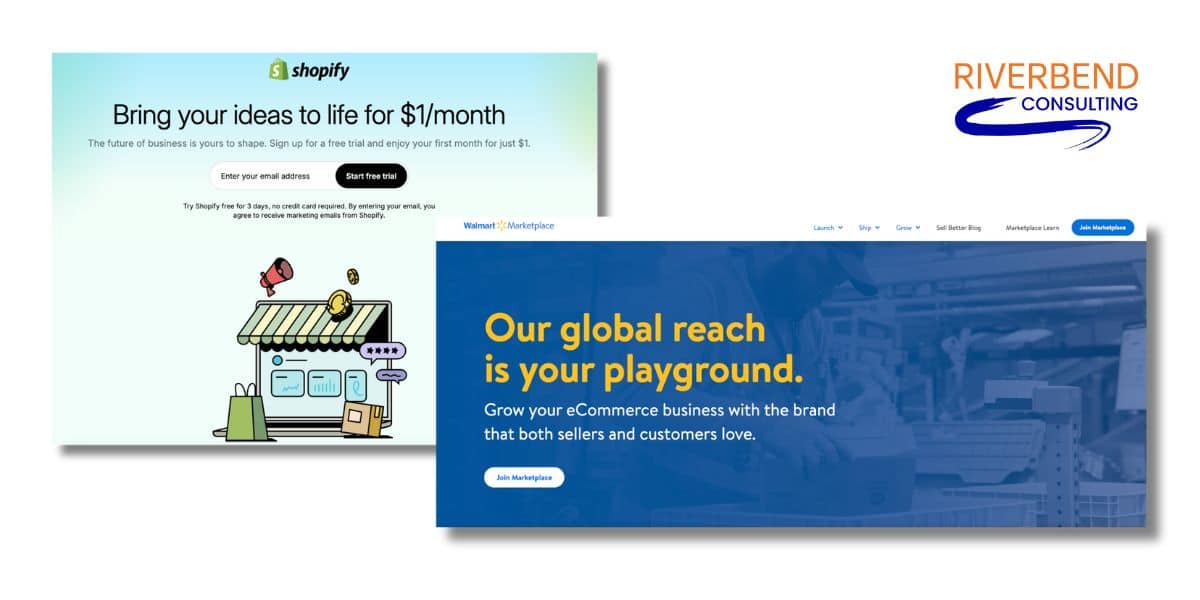
Multi-channel e-commerce expansion strategies: Challenges and considerations
Expanding to new platforms isn’t without its challenges. Each platform comes with its own set of rules, customer expectations and operational hurdles. To succeed, you’ll need to understand and adapt to these nuances.
Platform-specific challenges
Amazon, Shopify and Walmart cater to different customer bases and have unique expectations.
- Amazon: Known for its fast shipping and vast product selection. Customers expect competitive pricing and seamless fulfillment. However, you may face high fees and intense competition.
- Shopify: While Shopify offers freedom, you must handle your own marketing and drive traffic to your store. Success hinges on creating a stand-out brand identity and an engaging customer experience.
- Walmart: Walmart has stringent seller requirements and values competitive pricing. Standing out requires well-optimized listings and leveraging Walmart Fulfillment Services.
Considerations
Each platform also has its rules and regulations:
- Product listing requirements: Ensure your product descriptions, images and titles adhere to platform-specific guidelines.
- Fulfillment policies: Meeting shipping and return requirements is critical, whether using FBA, WFS, or your logistics.
- Tax obligations: Be prepared to navigate varying tax laws, especially when selling on Shopify, where you handle your operations.
Following the rules helps avoid penalties and builds trust with customers on each and every platform.
Other business expansion strategies to consider
Expanding your e-commerce business requires creativity and forward thinking. Beyond traditional platforms like Shopify and Walmart, there are additional strategies that can provide even greater growth potential.
Expanding to international markets
Selling internationally is a powerful way to grow your Amazon business by tapping into new customer bases. Amazon offers Global Selling, a program that simplifies international expansion by allowing you to list products in multiple Amazon marketplaces like the UK, Germany, Japan and beyond. However, success in global markets requires preparation. You need to adapt to local regulations, taxes and cultural preferences. For example, product packaging, descriptions and even keywords may need translation and localization. Leveraging Fulfillment by Amazon (FBA) in these regions can ease logistical challenges, but be sure to account for shipping times and customs fees in your pricing strategy.
Wholesale partnerships and B2B sales
E-commerce doesn’t have to be limited to direct-to-consumer sales. Expanding into wholesale or B2B partnerships can create additional revenue streams and stabilize cash flow. For instance, listing products on platforms like Faire or contacting retailers can help you secure bulk orders. Amazon also offers a Business-to-Business (B2B) marketplace where you can provide volume discounts for corporate buyers, schools and government organizations.
Leveraging subscription models
A subscription-based model can turn one-time customers into recurring revenue streams. Monthly replenishment of consumable products, such as skincare items or pet supplies, can build customer loyalty while stabilizing cash flow. The Amazon Subscribe & Save program makes it easy to implement this strategy within the platform. At the same time, Shopify offers complete control to customize subscription plans and offers perks like discounted pricing or early access to new products.
Expanding to niche marketplaces
Beyond Amazon, Shopify and Walmart, there are niche marketplaces that cater to specific audiences. For example, Etsy focuses on handmade or vintage goods, while eBay appeals to auction and bargain hunters. Expanding to these platforms can help you diversify your customer base and connect with buyers with diverse shopping preferences. Before diving into a niche marketplace, research its audience to ensure it aligns with your product offerings. Tailor your listings and marketing to resonate with each platform’s demographics.
How to create a consistent brand identity

You may rely heavily on Amazon’s marketplace trust, but expanding to platforms like Shopify or Walmart requires a proactive approach to establishing a distinctive brand identity.
- Creating a consistent brand voice: Your brand voice needs to resonate across all platforms. Begin by defining your brand’s personality. Is it playful, professional, or eco-conscious? Use your brand persona to tone your product descriptions, marketing copy and customer communications.
- Standout logos, packaging and marketing materials: Your logo and packaging are often the first impressions customers have of your brand. Invest in a design that reflects your brand persona and appeals to your target market. For example, eco-friendly products should use sustainable-looking packaging with earthy tones, while tech products might opt for sleek, modern designs. Extend this attention to detail to your marketing materials, ensuring they align with your overall brand aesthetic.
- Use storytelling to connect with customers: Stories make brands memorable. Share your journey, how your products solve real problems, or what inspired you to start your business. Use social media, email campaigns and product descriptions to harness an emotional connection with your audience. Platforms like Shopify offer tools to directly integrate your brand’s story into your website, while marketplaces like Walmart allow space for engaging brand pages.
Your path to multi-platform success starts here
Platfrms like Shopify and Walmart.com offer unique opportunities to reach new audiences, diversify revenue streams, and build a more resilient brand. By developing business expansion strategies that consider each platform’s strengths and align with your business goals, you can position your business for success across multiple channels. Whether you leverage Shopify’s integration with Amazon or tap into Walmart’s growing marketplace, the potential for growth is immense.
And remember, you don’t have to do it alone. Riverbend Consulting specializes in helping you navigate the complexities of e-commerce, from account health to platform expansion. Let’s work together to take your business to the next level.
Seller Account Health. Solved.