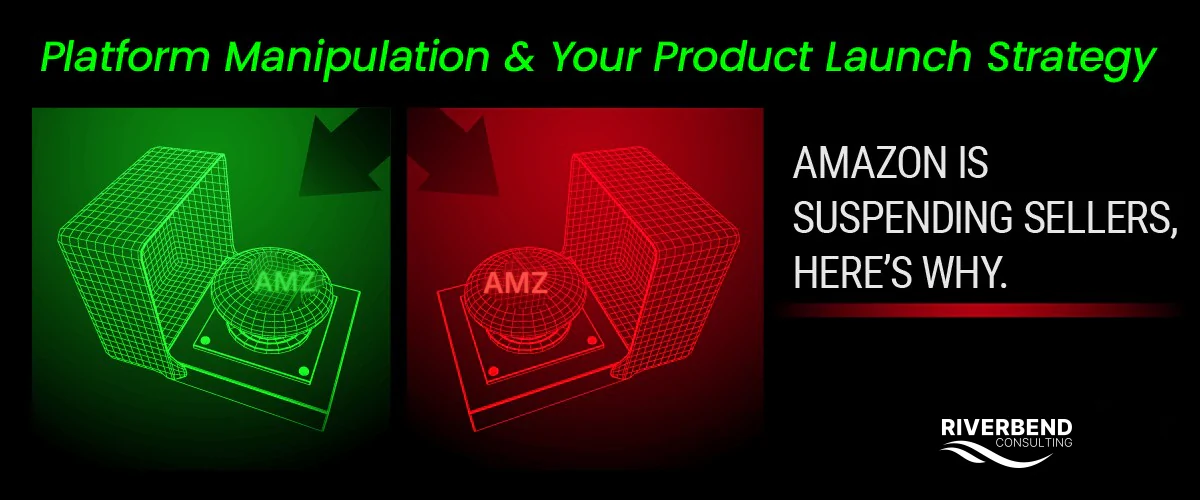
Once upon a time, Amazon loved a good launch strategy for a new product. My, how things have changed. Today, many of the strategies once used to make a splash on the platform can get a seller suspended.
Why has Amazon turned 180 degrees on which launch strategies are considered acceptable? And what should sellers do to preserve their selling privileges? Keep reading to find out.
A blissful Amazon honeymoon
Amazon rewards new products with a honeymoon on the platform. It’s just like a regular honeymoon for a couple enjoying newly wedded bliss. For 60 to 75 days or so, you can do no wrong. Every little thing you do well – whether it’s turning up in search results or making a sale – is given an outsized, positive reward.
A great honeymoon period on Amazon can dramatically improve sales for an ASIN for all time. By selling strong up-front, the ASIN can benefit from a higher sales rank, better on-platform SEO, and more.
Because of this, sellers have developed a wide range of launch strategies. For years, there were even software providers and consultants who specialized in nothing but ideas and tools for new product launches on Amazon. Many of them were successful. They helped sellers to be more successful. And they made new products into winners – fast.
The government orders an annulment
During the last several years, federal government agencies have put increasing pressure on Amazon to ensure its third-party Marketplace sellers are following the law.
A huge focus has been platform manipulation of all kinds. This includes a wide range of seller strategies:
Savvy long-term sellers know, however, that for many years Amazon actually encouraged many of these behaviors. They wanted sellers to be successful in the launch of new Amazon-only products. This benefitted sellers, but it also benefitted Amazon buyers thanks to expanded selection. And in return, Amazon benefitted as well.
But then came the crackdown. The U.S. Federal Trade Commission (FTC) went on a mission to stop fake reviews on Amazon and other online marketplaces. Once the FTC made it clear that shenanigans by sellers could lead to enforcement against Amazon itself, the game was up.
Suddenly, the rules changed. And today, the window of what Amazon sellers are allowed to do continues to shrink. In recent months, it’s become smaller than ever.
Review manipulation makes any review requests a danger
“Review manipulation” includes a large number of behaviors and tactics. Many of these were actually encouraged by Amazon several years ago as ways to launch products successfully.
Today? If Amazon detects review manipulation in a seller account, it may take a two-strikes approach. Or even one strike. On other words, if they catch a seller violating these rules once or twice, they are permanently banned from the platform.
Review manipulation can include:
- Asking for positive reviews
- Cherry-picking and asking for positive reviews only from happy customers
- Sending happy customers to give product reviews while sending unhappy customers to a customer service email or phone number
- Offering free products, whether or not you ask for a review
- Offering steep discounts for products, whether or not you ask for a review
- Receiving friends and family reviews
- Up-voting good reviews and down-voting bad reviews on your own products
- Down-voting good reviews and up-voting bad reviews on competitors’ products
None of these are allowed. And if Amazon warns a seller to stop these behaviors, the next warning can result in the account being blocked forever.
The most important thing most sellers should know? Amazon is now examining products in the fulfillment centers if they suspect that inserts may solicit reviews. If a seller is caught with a prohibited insert, they will be expected to remove all inventory with inserts from the warehouse immediately. This can be a business-buster, since the costs are prohibitive.
Best seller rank manipulation can sink an account – fast
Best seller rank (BSR) manipulation can be very … creative. Most sellers have never even considered these strategies as ways to boost their product launches. Because of this, when offered the ideas, some sellers don’t immediately comprehend how dangerous they are.
BSR manipulation essentially involves product sales that are not organic. In other words, buyers probably would not have purchased these products unless they received a tremendous deal from outside of the Amazon platform. These might include:
- Sales referred by “deals” sites that offer huge discounts on purchases for particular products
- Free products obtained from chatbots and buyer groups on social media
- Rebates for products purchased on Amazon
- Fake sales delivered to Amazon lockers – and never picked up
Amazon made some dramatic moves, even filing lawsuits and ripping away MWS access for deal sites and rebate software. But it’s been a while since that happened, so sellers are again being lured by the siren song of these strategies.
Will Amazon detect BSR manipulation? Often, investigators do not. But once they do, a seller will have a hard time ever getting permission to sell on the platform again.
Variation abuse has moved up the enforcement hierarchy
Since January, Amazon has grown increasingly aggressive in enforcing against variation abuse. How does this relate to platform manipulation? You may be surprised.
Many sellers who launch new products create a child variation on a successful listing. They take advantage of that existing ASIN’s solid BSR to increase visibility and sales of the new ASIN. Eventually, after the product is doing well enough, the seller may break the variation so that they are incompliance with variation policy.
Beware. Amazon has caught on to this concept. And unlike the strategies above – which Amazon once knew about and even approved – variation abuse as a launch strategy has never been OK with Amazon Seller Performance.
Listing abuse can also get sellers booted – but less often
Amazon also has never approved of listing abuse to launch products. The most common of these is known as “zombie ASINs.” This is when a seller finds a long-unused listing on the platform – preferably one with many excellent reviews. The seller then slowly changes the listing – first the title, then the photos, bullets and text. In the end, this zombie listing with its good BSR and reviews is converted into a completely new product.
What is the most important takeaway? Just because Amazon once allowed and even endorsed these product launch strategies, that doesn’t mean sellers can safely implement them now. Do so at your own risk. And understand the potential consequences.
If you’ve run into challenges with platform manipulation, or if you’d like a review of your business strategy, we are here to help! Reach out today.
Seller Account Health. Solved.