Amazon sellers know every penny counts, especially when it comes to Fulfillment by Amazon (FBA). FBA provides access to Amazon’s extensive logistics network but comes with costs, specifically fulfillment fees, that quickly add up. One often-overlooked way to save on these fees is by addressing packaging inefficiencies. Streamlined packaging reduces costs and minimizes environmental impact, which appeals to eco-conscious shoppers.
What are FBA fulfillment fees?
When you use Amazon’s FBA service, you’re charged fees for picking, packing, shipping and storing your products. These fees are based on a combination of factors, including the size, weight and category.

1. Picking and packing fees
Picking and packing fees are determined by your product’s size and weight and cover the cost of Amazon’s warehouse staff retrieving your product, packaging it securely and preparing it for shipment.
- Standard-size items: Products within Amazon’s standard size and weight thresholds incur lower picking and packing fees.
- Oversized items: Larger or heavier products require more handling and packaging materials, leading to higher fees.
2. Shipping fees
Shipping fees reflect the cost of delivering your product to the customer. While Amazon’s vast logistics network helps sellers access affordable rates, the fees depend on your product’s size and weight category. For instance:
- Lightweight, small items cost less to ship.
- Bulky items or those requiring special handling (e.g., fragile goods) incur higher shipping fees.
3. Storage fees
Amazon charges sellers monthly storage fees to keep inventory in its fulfillment centers. These fees are based on the cubic footage your products occupy and fluctuate depending on the time of year:
- Non-peak months (January–September): Lower rates encourage sellers to maintain stock.
- Peak months (October–December): Higher rates reflect increased demand for warehouse space during the holiday season.
- Long-term storage fees: Apply to inventory that remains in Amazon’s warehouses for more than 365 days, pushing sellers to optimize inventory levels.
4. Special handling fees
Certain products require extra care or services, resulting in additional fees. Examples include:
- Hazmat fees: Items classified as hazardous materials (e.g., batteries or chemicals).
- Prep Fees: These apply to products that need extra preparation, such as labeling, poly bagging, or bubble wrapping, before they’re eligible for FBA.
5. Returns processing fees
For items in categories with free returns (e.g., apparel or shoes), Amazon charges sellers a returns processing fee to handle returned products. This fee covers inspection, repackaging and restocking.
Reducing packaging dimensions or avoiding long-term storage can lead to noticeable cost reductions. Optimizing these factors ensures your FBA costs remain manageable and your business stays profitable.
How are FBA fulfillment fees calculated?
Amazon classifies products as either standard-size or oversized. Within these categories, further breakdowns include tiers based on dimensions and weight. You pay more for larger, heavier items, which is reflected in the FBA fulfillment fee.
For example:
- A small, lightweight item incurs a lower fee compared to a bulky product.
- Items that exceed certain dimensional thresholds are automatically classified as oversized, leading to significantly higher fees.
FBA Fulfillment fees are unavoidable but can be managed and minimized. Let’s start with packaging and bundling.
How packaging waste impacts your bottom line
It’s easy to overlook how much your packaging choices affect your profitability. Overly large or inefficient packaging raises unnecessary fulfillment fees and increases storage costs. Amazon calculates fees based on cubic footage, so even a few extra inches on each product can add up quickly over hundreds or thousands of units.
Excessive packaging can lead to customer dissatisfaction. Shoppers are increasingly eco-conscious and may prefer brands that prioritize sustainability. Minimizing waste can save money while attracting customers who value environmentally responsible practices.
How Amazon’s Cubiscan impacts your FBA fees

Amazon uses a Cubiscan to determine the dimensions and weight of products in its fulfillment centers. This system employs sensors to capture precise measurements of each item’s packaging, accounting for all aspects, including protrusions or loose materials. These measurements are crucial for calculating FBA Fulfillment fees, as they help determine the appropriate size tier and associated costs for storage and shipping.
If your products were inaccurately measured, you can request a re-evaluation. This involves contacting Amazon to perform a Cubiscan of the item, ensuring the correct dimensions and weight are recorded. Some or all of your inventory may be temporarily unavailable for sale while the fulfillment center processes the request.
Requesting a Cubiscan from Amazon ensures that your product’s dimensions and weight are officially recorded, which is critical for accurate fee calculations. However, Amazon’s measurements may only sometimes match your own, so the outcome might not necessarily work in your favor.
Amazon problem solving experts can help you navigate these challenges effectively. Professionals can guide you through the re-measurement process, assess discrepancies and identify opportunities to optimize your product listings and reduce fees.
Amazon FBA packaging optimization
FBA fulfillment fees are a necessary part of selling on Amazon, but they don’t have to drain your profits. Many sellers unknowingly pay higher fees simply because their packaging or product setup isn’t optimized. Small changes, like reducing packaging size or strategically bundling products, can lead to significant savings over time.
Not only does smarter packaging lower costs, but it also contributes to a better customer experience and supports sustainability efforts—something shoppers value now more than ever.
Sustainable e-commerce packaging to reduce waste and save on fees
- Understand Amazon’s packaging guidelines: Amazon has strict packaging requirements. Ensuring packaging meets their standards prevents rejections or delays.
- Use eco-friendly, lightweight materials: Materials like recyclable paper or biodegradable plastics help reduce waste while keeping products safe. Plus, they align with the SIPP program’s goals.
- Test packaging for shipping durability: Before finalizing packaging, test it to ensure it can handle the rigors of transit. The last thing you want is an increase in damaged returns due to weak materials.
- Consolidate listings with bundles: Combining related products into one bundle reduces individual packaging and fulfillment fees. For instance, offer a single package instead of selling a skincare trio separately.
- Optimize packaging dimensions: Use custom-fit boxes or envelopes that snugly fit your product. Eliminate unnecessary fillers like large bubble wrap or excessive cardboard.
- Switch to lightweight material: Consider biodegradable or recyclable materials that are also lightweight. Avoid heavy, bulky boxes unless necessary for product safety.
- Consolidate products with bundles: Bundling complementary products into a single package reduces individual shipping fees. For example, a skincare set with cleanser, toner and moisturizer can be sold in one box instead of three listings. Bundling saves on FBA fulfillment fees and enhances your product’s perceived value.
What is the Ships in Product Packaging (SIPP) program?
The Ships in Product Packaging (SIPP) program is Amazon’s initiative to reduce packaging waste. Through SIPP, products are shipped in their manufacturer-provided packaging instead of an additional Amazon-branded box.
How SIPP works
Amazon’s Ships in Product Packaging (SIPP) program offers a way to reduce packaging waste and potentially lower fulfillment fees. By allowing products to be shipped in their original manufacturer-provided packaging, SIPP eliminates the need for additional Amazon-branded boxes. However, this streamlined shipping method requires a multi-step approval process. Here’s how the program works and what sellers need to know to participate.
- Enrollment: Products must meet strict requirements for durability and labeling.
- Reviews and Approval: Packaging must be robust enough to withstand shipping without additional protection.
- Products ship directly to customers: Products are sent as-is once approved, without extra boxing.
How to enroll in SIPP
- Log in to your Seller Central account.
- Navigate to the Sustainability Programs section.
- Apply for SIPP by submitting your product details and packaging specifications.
- Await Amazon’s approval, which may include a testing process to ensure compliance with their standards.
What are the pros and cons of the SIPP program?
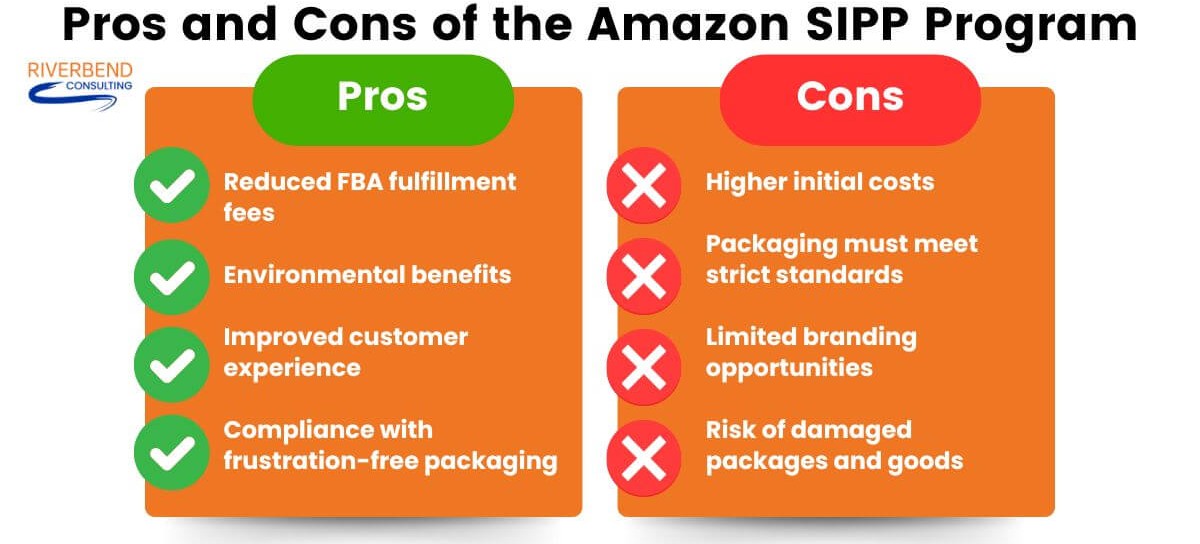
While the SIPP program offers clear benefits like reduced packaging waste and potential cost savings, it’s not without its challenges. But it’s not all smooth sailing. There are some challenges to consider.
Pros
- Reduced FBA fulfillment fees: Lower packaging costs mean lower fees, as the product’s size and weight are minimized.
- Environmental benefits: Less packaging waste aligns your brand with sustainability efforts, which can attract eco-conscious customers.
- Improved Customer Experience: Customers appreciate receiving products with minimal, easy-to-open packaging.
- Compliance with Frustration-Free Packaging: SIPP often overlaps with Amazon’s Frustration-Free Packaging standards, boosting visibility in the marketplace.
Cons
- Higher Initial Costs: Redesigning and testing packaging can be costly upfront.
- Packaging must meet strict standards: Not all products are eligible, and sellers may face challenges ensuring compliance.
- Limited branding opportunities: Without an external Amazon-branded box, your product must stand out with its own packaging design.
- Risk of damage: Products shipped without additional protection may be more susceptible to damage in transit.
Is Amazon SIPP worth it?
Enrolling in the SIPP program depends on your product, brand goals, and long-term strategy.
When SIPP makes sense
- You sell durable products: Items like books, gadgets and toys that don’t require fragile handling are ideal candidates.
- You want to stand out as eco-friendly: Sustainability is a key differentiator for many customers and SIPP aligns with this ethos.
- You’re looking to cut costs: Sellers with high fulfillment fees can see significant savings by reducing packaging dimensions.
When SIPP may not be ideal
- Your products are fragile: Items like glassware or liquids often require extra protection that SIPP doesn’t provide.
- You rely heavily on branding: If your product packaging isn’t eye-catching, you may miss the opportunity to create a memorable unboxing experience.
SIPP might not be a one-size-fits-all solution, but for those who qualify, it’s a powerful way to reduce costs and align with the growing demand for sustainable business practices. With sustainability becoming a key focus for Amazon and its customers, adapting to programs like SIPP can help you stay ahead of the competition while fostering a positive impact on the environment.
Save money and reduce waste with more innovative strategies
While programs like SIPP offer advantages, they require careful consideration and alignment with your product offerings and business goals. Evaluating these opportunities ensures that the chosen strategies complement operational efficiency and long-term growth objectives.
Taking proactive steps toward waste reduction demonstrates a commitment to responsible business practices, which resonates with eco-conscious shoppers and fosters brand loyalty.
Streamlined packaging solutions can minimize the risk of damaged products in transit, enhancing the customer experience and reducing returns. In today’s competitive Amazon marketplace, sellers who prioritize innovation and sustainability are more likely to gain a competitive edge while building a brand that customers trust and value.
If you need help with inaccurate product measurements, unexpected fees, or any other FBA-related issues, Riverbend Consulting is here to help. Our Amazon problem solving experts specialize in navigating complex situations to protect your business and maximize your success. Contact us today for tailored solutions that save time, reduce costs and keep your Amazon operations running smoothly.
Seller Account Health. Solved.