Amazon offers a variety of deals, promotions and coupons to help you capture buyers’ attention, drive conversions and increase your sales rank. Amazon deals promotions and coupons aren’t just about discounts; they’re about creating compelling offers that shoppers can’t resist.
What are Amazon Promotions?
Amazon promotions are marketing tools to incentivize purchases and improve product visibility. They can help increase sales velocity, clear excess inventory and attract repeat buyers. Understanding the types of promotions available can help you select the right strategy for your goals.
What is an Amazon Coupon? 
Amazon coupons are one of the most visible promotional tools on the platform. They allow you to offer instant discounts to shoppers, displayed as clickable badges on search results and product pages. These eye-catching banners help you stand out and attract more clicks.
Types of Amazon Coupons
- Dollar-off coupons: Dollar-off coupons provide a flat discount, such as “Save $10 on this product.” They’re especially appealing to customers looking for clear, upfront savings.
- Percentage-off coupons: Percentage-off coupons offer a percentage discount, like “Save 15% on your order.” They work well for higher-priced products because the perceived value of the discount increases with the price.
How much does it cost to run a coupon on Amazon?
Amazon coupons are cost-effective and flexible. Here’s a breakdown of the expenses involved.
- Setup fee: Amazon charges $0.60 per coupon redeemed. This fee is deducted automatically when a customer uses the coupon.
- Discount Cost: You’re responsible for the discount value. For instance, if 200 customers redeem a $5 coupon, you’ll pay $1,000 in discounts plus $120 in fees.
Despite the costs, coupons often deliver a strong return on investment because of their high visibility and ability to attract deal-hunting shoppers. Coupons can create urgency and a sense of exclusivity, motivating customers to act quickly.
Recent changes to Amazon Coupons
Amazon recently updated the duration of its coupon offerings as of September 5, 2024, introducing changes that align with the holiday season and the second Prime Day in October.
- Standard Coupons now last 30 days (reduced from 90 days).
- Reorder Coupons are extended to 180 days.
- Subscribe & Save Coupons are now valid for 365 days.
These adjustments aim to make coupons more impactful by creating urgency for short-term offers while supporting long-term customer loyalty with extended durations for Subscribe & Save options. Coupons issued before the update will remain unaffected and retain their original 90-day validity.
Understanding Amazon Coupon errors and how to avoid them
Amazon coupon errors can lead to missed opportunities and policy violations. Here are some common mistakes sellers make with coupons and how to avoid them.
1. Incorrect discount values
Setting a discount too low, making it unattractive to customers, or too high, cutting deeply into profits. Double-check the discount amount before launching. Aim for a sweet spot enough to entice customers but not so much that it hurts your margins.
2. Pricing and discount validation errors
Amazon coupons must meet specific pricing and discount rules to be eligible. Errors can occur if an ASIN lacks a “Was Price,” which can be resolved by generating sales through ads or discounts. Prices exceeding Amazon’s limits, such as over 30% higher than the Was Price, require adjustment to the suggested range. Discounts must fall between 5% and 50% of the ASIN’s price. After you’ve made any necessary changes, wait up to four hours for the coupon to update or recreate it if necessary.
3. Inventory error
If you don’t have enough inventory to meet the demand generated by your coupon, the offer will be disabled on the affected product(s). Ensure you restock inventory for the product and double-check all product attributes. Once resolved, recreate the coupon to ensure it becomes active again.
4. Star rating error
Products must meet specific star rating criteria to be eligible for Amazon Coupons. Products with no ratings are automatically eligible, while those with 1–4 ratings must have an average rating of at least 1 star. For products with five or more ratings, an average rating of at least three stars is required. If one of your ASINs doesn’t meet these criteria, you can still proceed by running the coupon with the eligible products. Alternatively, you can recreate the coupon without including the ineligible ASINs.
5. Potentially embarrassing, adult or refurbished product error
Products flagged as adult, offensive, embarrassing, or in used/refurbished condition are ineligible for coupons. Confirm that your products don’t fall into these restricted categories. If certain items are flagged, adjust the campaign by excluding them and re-run the coupon with the eligible products.
6. Selling price error
A Selling price error occurs when an ASIN doesn’t meet Amazon’s requirement that the current price + shipping price exceeds the minimum seller price for the respective store.
Minimum thresholds vary by region, such as $5 USD for the US or 5 CAD for Canada. If an ASIN is excluded from your coupon due to this error, you can resolve it by adjusting the product’s price or shipping cost to meet the required minimum. The coupon will automatically reactivate once the price aligns with Amazon’s eligibility criteria within 24 hours.
What is an Amazon Lightning Deal?
An Amazon Lightning Deal is a time-limited promotion that features your product on Amazon’s highly visible “Deals” page. These deals often result in a significant spike in sales during their active period, as shoppers feel compelled to take advantage of the offer before time or inventory runs out.
Eligibility
To qualify for a Lightning Deal, your product must meet Amazon’s requirements.
- Performance metrics: Your account must not face Amazon seller account suspension and must maintain strong performance metrics, including customer satisfaction and order defect rates.
- Product ratings: The product should have a minimum 3-star rating, though higher ratings are preferred.
- Adequate inventory: You must have enough stock to meet the potential demand during the deal.
- Amazon compliance: Your product must meet all Amazon listing and category guidelines, avoiding violations of restricted product, IP, or safety rules to prevent account issues.
What do Lightning Deals cost?
The cost of a Lightning Deal varies depending on the event and timing. Standard fees range from $150 to $600 per deal, but high-traffic events like Prime Day can be more expensive. While the cost may seem high, creating urgency with Amazon Lightning Deals often outweighs the expense.
Step by step: How to create a Lightning Deal on Amazon
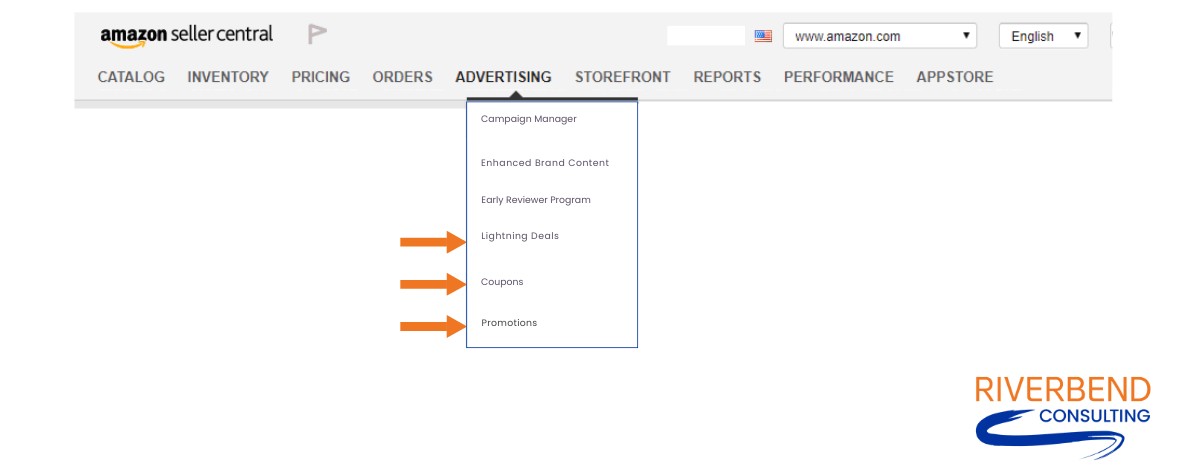
Step 1 Log Into Seller Central: Access your account and navigate to the “Advertising” tab. From the dropdown menu, select “Deals.”
Step 2 Select your product: Choose an eligible product that meets Amazon’s criteria for Lightning Deals.
Step 3 Set your discount: Determine the deal price, ensuring it’s competitive and meets Amazon’s minimum discount requirements.
Step 4 Pick a schedule: Choose the date and time for your deal to go live. Prime shopping hours or seasonal peaks can maximize results.
Step 5 Submit for approval: Once you’ve finalized the details, submit your deal for Amazon’s review. You’ll be notified once it’s approved.
Step 6 Monitor your deal: Once approved, monitor its performance during the live period. Adjustments cannot be made mid-deal, so proper preparation is crucial.
With the right product and timing, Lightning Deals can help boost your visibility and sales quickly.
What’s an Amazon Deal? How Are Amazon Deals unique from other Amazon Promotions?
Amazon Deals are similar to Lightning Deals but operate on a longer timeline. While Lightning Deals are fast-paced and create urgency, standard Amazon Deals provide steady visibility and consistent traffic over several days or weeks. Amazon deals are generally less expensive than lightning deals, but the sales impact is gradual.
While Lightning Deals get prominent placement during their brief window, regular deals are less dramatic but effective in driving sustained sales. Amazon Deals are a solid choice if you want consistent performance without the high stakes of a Lightning Deal.
Other types of Amazon promotions
In addition to coupons and Lightning Deals, Amazon offers a variety of promotions that can help you attract customers and boost sales. These promotional tools are designed to appeal to different buyer behaviors, from encouraging larger purchases to incentivizing impulse buys. Below are some of the most popular types of Amazon promotions and how they can benefit your business.
- Percentage-off discounts: These are straightforward offers like “Save 20% on your purchase.” They’re effective for drawing price-conscious customers and encouraging impulse buys.
- Buy one, get one (BOGO): BOGO promotions include options like “Buy one, get one free” or “Buy two, get one at 50% off.” These are excellent for increasing the average order size.
- Free shipping: If your product isn’t eligible for Prime, offering free shipping can make your listing more competitive and appealing.
- Volume Discounts: Also known as tiered discounts, these promotions reward customers for purchasing larger quantities. For example, “Buy 3, save 15%.”
Each type of promotion can serve a unique purpose, so experimenting with what resonates with your audience is key to maximizing results.
How do I add a promotion to my Amazon Seller Account?
Here’s how to set up Amazon promotions in Amazon Seller Central.
Step 1 Log into Amazon Seller Central: Go to the “Advertising” tab and select “Promotions.”
Step 2 Choose a promotion type: Pick from percentage-off, BOGO, or free shipping promotions.
Step 3 Set conditions: Define criteria for the promotion, such as minimum purchase quantities or specific product eligibility.
Step 4 Customize your message: Add a promotional message to entice buyers, like “Limited Time Offer: Buy Two, Save 20%!”
Step 5 Select a timeframe: Schedule your promotion’s start and end dates.
Step 6 Submit for approval: Review your details and submit. Once approved, your promotion will go live.
Can Amazon deals promotions and coupons help me increase my sales rank?
Absolutely! Amazon deals promotions and coupons can significantly impact your sales rank.
- Increased sales volume: Amazon’s algorithm favors products with solid sales velocity. Promotions drive more purchases, improving your rank.
- Better search visibility: Coupons and deals often get featured prominently in search results, attracting more clicks and conversions.
- Enhanced customer loyalty: Shoppers who take advantage of deals may become repeat customers, boosting long-term sales and rankings.
While Amazon deals promotions and coupons can improve your rank, they shouldn’t erode your profit margins.
What to Avoid: Can Amazon deals promotions and coupons cause Amazon seller account suspension?
While Amazon deals promotions and coupons are powerful tools for boosting sales, improper use can lead to severe consequences, including account suspension. Amazon is highly vigilant when it comes to maintaining marketplace integrity. Sellers must adhere strictly to its policies. Here’s what to avoid to ensure your promotions don’t put your account at risk.
1. Review manipulation through promotions
Offering deals or coupons in exchange for positive reviews is strictly prohibited. For example, providing a 50% discount and requesting a favorable review violates Amazon’s review manipulation policies.
Amazon uses advanced systems to detect review manipulation. Violations can result in immediate account suspension or permanent bans.
What to do instead: Keep your promotions separate from review requests. If you request reviews, ensure they are unbiased and adhere to Amazon’s guidelines.
2. Creating misleading or inflated discounts
Setting artificially high prices before a promotion to make the discount appear more significant than it is. This practice, often called “price gouging” or “strike-through price manipulation,” is against Amazon’s pricing policies.
Misleading pricing undermines customer trust and Amazon penalizes sellers found engaging in deceptive discounting practices.
What to do instead: Ensure your discount reflects a genuine reduction from your normal selling price. Keep your pricing consistent and transparent.
3. Promotions that lead to policy violations
Running promotions that violate Amazon’s restricted product guidelines can lead to policy violations. For instance, offering deals on products in prohibited categories or items that lack required approvals can result in account suspension.
Amazon holds sellers accountable for compliance. Selling restricted or prohibited items, even unintentionally, can lead to severe penalties including Amazon seller account suspension.
What to Do Instead: Verify that all your products meet Amazon’s guidelines and approvals before creating any promotion.
5. Failing to deliver on promotional promises
Offering a deal or coupon and then failing to honor it due to insufficient stock or errors in pricing. This can lead to high cancellation rates or negative customer experiences. Amazon tracks your order defect rate and consistent issues with unfulfilled promotions can result in account deactivation.
What to Do Instead: Carefully plan your inventory and pricing before launching a promotion. Ensure enough stock to meet demand and that your pricing is accurate.
6. Using promotions to circumvent Amazon Fees
Creating promotions to avoid Amazon referral or fulfillment fees, such as bundling unrelated products at a steep discount to save on costs, may violate Amazon’s fee-avoidance policies. Amazon enforces strict policies around fee transparency and violations can lead to Amazon seller account suspension.
What to do instead: Design promotions that align with Amazon’s fee structures and ensure your practices are transparent and compliant.
Amazon promotions, deals and coupons are excellent tools for boosting visibility and sales, but they come with responsibility. Avoiding the pitfalls outlined above is crucial to protecting your account from suspension. Always review Amazon’s policies before launching a promotion and stay informed about updates to the platform’s rules.
If you’re unsure whether your promotions are compliant, consulting with an expert can help. At Riverbend Consulting, we specialize in helping you navigate Amazon’s policies to maximize growth while minimizing risks.
Maximize Amazon sales with promotional strategies
From Lightning Deals that create urgency to coupons that increase visibility, each option has its strengths. From Lightning Deals that create urgency to coupons that increase visibility, each option has its strengths. Incorporating Amazon deals promotions and coupons into your strategy can attract more customers, drive sales and improve your ranking.
Riverbend Consulting is here to guide you if you’re ready to take your promotions to the next level but need a helping hand. We’ll help you navigate the complexities of Amazon’s marketplace and create strategies that deliver measurable results.
Amazon. Solved