
Imagine investing months—or even years—perfecting a product that represents your brand, only to find a knockoff flooding Amazon with a design almost identical to yours. It’s not just frustrating; it’s devastating. Losing sales to an infringer can erode your profits and your brand’s reputation. Big brands like Crocs have faced similar battles, spending years in legal disputes to defend their iconic clog design. For smaller Amazon sellers, the stakes are even higher because one infringement claim can put your entire account at risk.
This is why design patent infringement on Amazon is a battle that requires both a strong offense and defense. Offensively, you need to protect your designs with proper patents and documentation. Defensively, you must understand how to navigate Amazon’s policies and respond swiftly if accused of infringement. In this guide, we’ll explore how to safeguard your products and handle the challenges of design patent disputes in the ever-competitive Amazon marketplace.
What is a design patent?

A design patent protects a product’s ornamental or aesthetic aspects rather than its functionality. Think of it as the legal shield for how a product looks. For example, the unique shape of a smartphone, the intricate pattern on a piece of jewelry, or the distinctive design of a chair can all be protected under a design patent.
Patents are critical for sellers who invest in designing visually appealing products that stand out in the marketplace.
Unlike a utility patent, which safeguards how a product works, a design patent ensures that no one else can copy or mimic the unique appearance of your product without facing legal consequences. Design and utility patents serve different purposes, though they both protect intellectual property. Here’s a breakdown:
Design patent:
- Focus: Protects the appearance or ornamental design of a product.
- Duration: Typically lasts 15 years from the date of issuance.
- Examples: The shape of a bottle, the pattern layout, or the lamp’s appearance.
Utility patent:
- Focus: Protects the functionality or how a product works.
- Duration: Lasts up to 20 years from the filing date, provided maintenance fees are paid.
- Examples: A new type of motor, a medical device, or an innovative software algorithm.
It’s essential to distinguish between these two types of patents on Amazon. While design patents often lead to disputes over product aesthetics, utility patents can result in more complex legal battles over functionality. Knowing the difference helps you appropriately protect your products and comply with regulations.
Does Amazon enforce design patents?
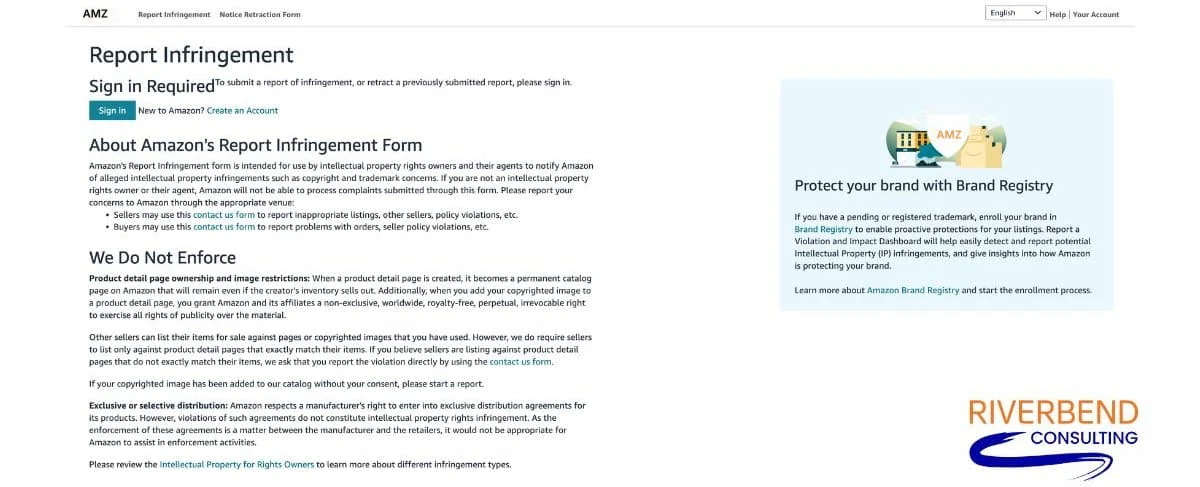
Yes, Amazon enforces design patents, but the process isn’t always straightforward. Through its Intellectual Property (IP) Policy, Amazon aims to provide a fair marketplace for sellers and buyers alike. Here’s how design patent enforcement works on the platform.
- Reporting infringement: Patent holders can report violations through Amazon’s “Report a Violation” tool. They must provide proof of their registered design patent and demonstrate how the infringement occurred.
- Proactive measures: Amazon’s automated tools may flag listings that closely resemble protected designs, but manual intervention by patent holders is often required.
- Consequences for sellers: If the marketplace confirms design patent infringement on Amazon, the offending listing may be removed, and you could face Amazon seller account suspension or a permanent ban.
Understanding how Amazon enforces design patents can help you avoid violations and handle claims effectively.
Is Amazon liable for patent infringement?
Amazon’s liability in patent infringement cases is limited due to its role as a third-party platform. Generally, the responsibility for ensuring that a product doesn’t infringe on patents lies with you, the seller. However, there are some nuances to consider:
Some lawsuits have challenged Amazon’s liability for patent infringement, particularly for products sold and fulfilled directly by Amazon. These cases remain rare and are usually resolved on a case-by-case basis.
Compliance with patent laws is your sole responsibility. Ignorance is not a defense and can lead to significant consequences, including financial losses and suspension of your Amazon seller account.
Risks of ignoring infringement claims on Amazon
Ignoring a design patent infringement claim on Amazon can be disastrous. Amazon takes intellectual property violations seriously and failure to address a claim can lead to severe consequences, including removing your listings or Amazon seller account suspension. Worse, the claimant could escalate the issue to legal action, resulting in significant financial costs and potential damage to your reputation.
It’s nearly impossible to ignore patent-related issues because Amazon consistently removes the ASIN in question. Most are eager to get ASINs reinstated as quickly as possible and are understandably apprehensive about patent disputes. While some sellers might attempt to overlook these issues, brand owners almost never do, as they are the primary targets for this type of intellectual property claim. Resellers, on the other hand, are far less likely to encounter these challenges.
As for the notion of “guilty until proven innocent,” it’s important to clarify that this isn’t an Amazon policy—it’s driven by legal requirements. The law obligates Amazon to validate intellectual property complaints and take action, rather than waiting for a rebuttal. Amazon’s swift action isn’t about penalizing sellers; it’s about protecting the platform and adhering to legal obligations.
Amazon design patent protection strategies
Protecting your products from design patent infringement requires a proactive strategy that combines creativity, research and legal safeguards. As an Amazon seller, your designs are a cornerstone of your brand’s identity, and ensuring they remain yours is critical to your success. Here’s how to protect your products effectively.
#1 Secure a design patent: If your product has a unique appearance, apply for a design patent through the appropriate patent office, such as the USPTO. This legal protection ensures that no one can copy your design without consequences.
#2 Conduct patent searches: Before launching a product, thoroughly search existing design patents to ensure your creation doesn’t unintentionally infringe on someone else’s intellectual property. Tools like the USPTO’s database or professional patent search services can help.
#3 Maintain clear documentation: Keep detailed records of your design process, including sketches, prototypes, and communication with manufacturers. This documentation can be invaluable if you need to prove originality.
#4 Amazon Brand Registry: Register your brand with Amazon to gain access to tools that help monitor and protect your intellectual property. Brand Registry enables you to address violations quickly and effectively.
#5 Monitor competitors: Regularly review the marketplace for products that may infringe on your design. Prompt action can prevent infringement from escalating and affecting your sales.
#6 Work with experts: Consult with intellectual property attorneys to strengthen your strategy. Whether applying for a patent or addressing a claim, professional guidance ensures you’re on solid ground.
#7 Educate your team: If you work with designers or manufacturers, ensure they understand the importance of intellectual property and the risks of infringing on others’ designs.
What to do if you experience design patent infringement on Amazon
Discovering that someone has infringed on your design patent can feel like a punch to the gut. All the time, effort and resources you poured into creating a unique product are suddenly at risk and your business future might hang in the balance. While it’s easy to feel overwhelmed, taking swift and decisive action to proving design patent infringement on Amazon is key to protecting your intellectual property and ensuring your hard work doesn’t go to waste. Here’s what you can do:
Step 1 Gather evidence: Document the infringement by taking screenshots of the offending listing. Collect your patent documentation, including the registration number and issuance date.
Step 2 Contact the infringer: Send a cease-and-desist letter detailing the infringement and requesting the removal of the product.
Step 3 Report to Amazon: Use the “Report a Violation” tool to notify Amazon. Provide detailed evidence, including your patent registration and a clear comparison of the designs.
Step 4: Monitor progress: Follow up with Amazon to ensure your claim is being processed.
While the process can be time-consuming, persistence is key to resolving design patent infringement issues on Amazon.
How to appeal design patent infringement on Amazon

False design patent infringement claims on Amazon are more common than you may think. Sometimes, competitors may file claims to eliminate competition, while in other cases, misunderstandings or overly broad patents can lead to wrongful accusations. False claims can be frustrating and disruptive, especially when they result in listing removals or account health warnings. Unfortunately, Amazon’s “guilty until proven innocent” approach to intellectual property disputes places the burden of proof squarely on the accused seller.
While these claims are serious, they’re not insurmountable if you respond with the right strategy. Acting swiftly and providing a well-prepared appeal can mean the difference between clearing your name and losing valuable sales opportunities. Knowing how to craft a clear, evidence-backed appeal is essential to protecting your business.
Step 1 Understand the claim: Review the complaint filed against you to understand the alleged infringement. Compare your product with the claimed patent to identify potential overlaps.
Step 2 Prepare your defense: Gather documentation showing your product’s originality, such as design drafts and manufacturing records. Obtain a legal opinion from an intellectual property attorney to support your case.
Step 3 Submit an appeal: Log into your Amazon Seller Central account and navigate to the “Account Health” section. Provide a detailed explanation, supported by evidence, of why your product doesn’t infringe on the patent.
Step 4 Follow up: Monitor your case status and respond promptly to any additional requests for information from Amazon.
Appealing an infringement claim can be challenging, but a well-prepared and thorough response increases your chances of success.
Emerging trends in patent protection
One growing trend in patent protection is the increased use of technology to identify and prevent design patent infringements. Amazon has invested in AI-driven tools to monitor listings and flag potential violations, making it more critical than ever for sellers to ensure their products comply with patent laws.
Another shift is the global nature of patent disputes. As more sellers enter international marketplaces, understanding the differences in patent laws between countries has become necessary. For instance, a design patent registered in the U.S. might not offer protection in Europe or Asia, leaving sellers vulnerable. Sellers must consider filing patents in multiple jurisdictions to protect their designs globally; smaller brands have growing awareness about the importance of proactively protecting their intellectual property. Filing for patents early and maintaining clear design process documentation are now standard practices for savvy sellers. As the marketplace becomes more competitive, effectively defending your products is essential for survival. Staying informed about these trends can help you make smarter decisions and avoid costly pitfalls.
Protecting your products from design patent infringement is a must, not a maybe
Facing a design patent infringement claim on Amazon can be overwhelming, but Riverbend Consulting is here to help. Our team specializes in crafting effective appeals, guiding you through gathering evidence, building a strong case and presenting it to Amazon for the best possible outcome. With deep expertise in Amazon’s policies and processes, we help sellers avoid costly mistakes and resolve claims quickly. If you need help with an IP issue, Contact Us on our website. We will escalate to the right people and work toward fixing your issue – with the persistence you need.
When disputes occur, swift and strategic action becomes key to preserving your business. The Amazon marketplace is a dynamic and highly competitive environment. Sellers equipped with the proper knowledge and preparation can successfully navigate its challenges. Whether you are defending your designs or addressing infringement claims, staying informed and making decisive choices ensures your business continues to grow and thrive.
Seller Account Health. Solved.